

























































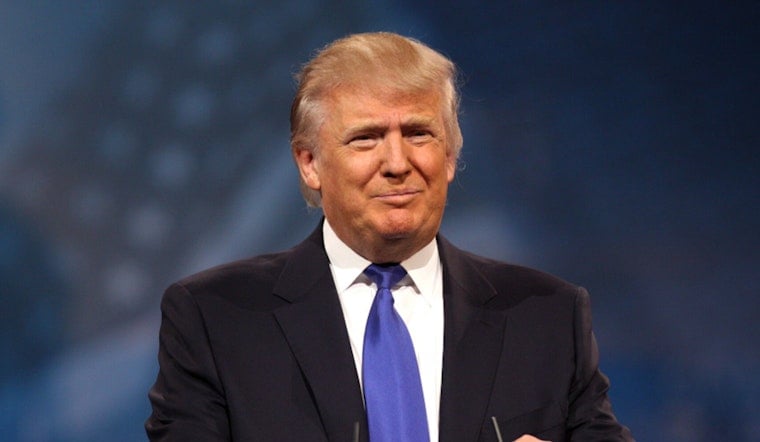
President Donald Trump abruptly scrapped a planned Capitol signing ceremony for a bipartisan housing bill on Wednesday, turning what was supposed to be a victory lap on homebuilding into a bare-knuckle brawl over voting rules. He labeled his separate voter ID proposal, the SAVE America Act, a “national emergency” and insisted the Senate weaken or scrap the filibuster to move that bill first, stunning lawmakers who had just delivered a rare, lopsided win on housing policy.
Instead of a feel-good moment, Trump’s decision set off another high-stakes clash between the White House and Senate Republicans, as he tied a broadly supported housing package to a far more divisive overhaul of election law.
What Trump posted
On Truth Social, Trump declared, "Today's Housing News Conference and Signing is hereby cancelled until such time as we pass the desperately needed SAVE AMERICA ACT, which I consider to be a National Emergency," according to Axios. In the same post, he urged Republicans to "terminate the filibuster" and pushed GOP senators to attach the SAVE Act to other priority measures. White House aides did not immediately elaborate on the message.
Where the housing bill stands
The housing package itself had already sailed through Congress with overwhelming bipartisan support, according to AP. The Senate approved it 85-5, and the House followed with a 358-32 vote, sending it toward the president’s desk as leaders prepared for a celebratory signing.
Under the Constitution, the president has 10 days to sign or veto a bill. If he does nothing and Congress stays in session, the measure becomes law automatically. A pocket veto is possible only if lawmakers adjourn during that 10-day window, which makes the coming days legally important and politically fraught.
What the SAVE America Act would do
The SAVE America Act, which Trump is elevating over the housing bill, would require documentary proof of citizenship in order to register to vote and mandate a government-issued photo ID to cast a ballot, according to PBS NewsHour. It would also sharply restrict universal mail-in voting, with only narrow exemptions, changes that critics warn could create new obstacles for seniors, students and low-income voters.
The measure has already passed the House, but in the Senate it does not have the 60 votes needed to clear a filibuster. That shortfall is the backdrop for Trump’s demand that Republicans consider changing Senate rules to push the bill through.
GOP reaction and Capitol friction
On Capitol Hill, Republican senators voiced irritation at both the timing and tone of Trump’s move, saying they had wanted to highlight a concrete policy win on housing instead of reigniting an internal party fight, as reported by The Washington Post. Lawmakers who had been ready for a bipartisan photo op instead found themselves fielding questions about a procedural showdown.
Trump also took aim at Sen. Elizabeth Warren’s role in crafting parts of the housing package, dismissing her contribution as "of minor importance" compared with his own priorities, according to Tampa Free Press. The episode fit a recent pattern of the president linking unrelated issues, from surveillance-law reauthorizations to personnel disputes, to his push for the SAVE Act.
How this could ripple across other legislation
Lawmakers warn that this hardball tactic is already complicating other congressional deadlines. Earlier this month, Trump intervened in a confirmation process and tied a FISA reauthorization to passage of the SAVE Act, a maneuver that stalled a hearing for the director of national intelligence and rattled GOP leaders, according to The Guardian.
The accumulating standoffs have left some Senate Republicans pressing for a more pragmatic path that avoids rewriting chamber rules, although the conference remains split on how directly to confront the president’s demands.
What's next
The immediate question is what Trump will do with the housing bill that is now in limbo: sign it, veto it or simply let it become law without his signature. Each option carries its own legal and political fallout over the next 10 days, per AP.
If he refuses to act or keeps pressing for a filibuster change as a condition for movement on the SAVE Act, Republicans will have to decide whether to prioritize his voting-law push or protect the bipartisan housing package they just sent to his desk. For now, the signing ceremony is off, the housing bill’s fate is uncertain and the Capitol is bracing for yet another round of procedural brinkmanship.





