

























































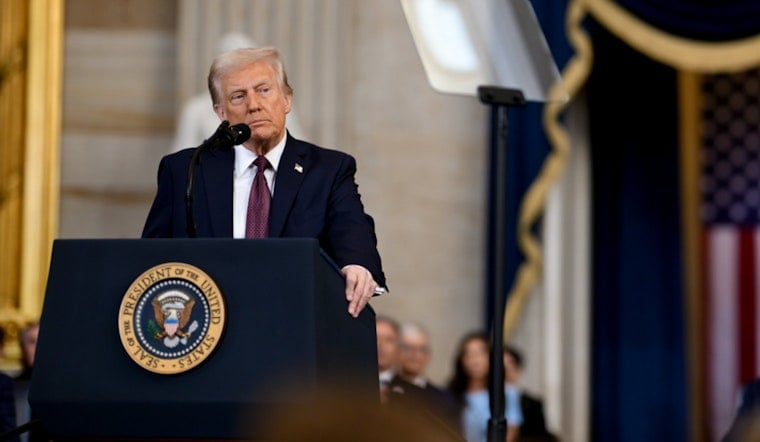
President Trump is turning up the heat on Big Oil, ordering the Justice Department to investigate major oil companies after accusing them of pocketing savings from cheaper crude instead of passing them on to drivers. In a post that went up overnight on his social feed, Trump said “customers are being gouged” at the pump and moved a familiar political gripe about gas prices into the realm of potential federal enforcement. The move follows a pullback in global crude prices after an interim U.S.-Iran memorandum reopened the Strait of Hormuz, a shift traders say should loosen supplies and, eventually, ease prices.
In a post on Truth Social, Trump complained that “The big Oil Companies are not dropping their price at the pump commensurate with the sharply lower prices they are paying for Oil” and said he had “instructed the DOJ to immediately start looking into this.” He added a warning that “Gasoline prices better start going down a lot faster than what I'm seeing!” He did not name specific firms or spell out how broad the requested probe should be. The comments were also reported by Axios.
Gulf accord and the crude slide
The recent drop in crude that set off the president's anger followed a tentative understanding with Iran that reopened shipping through the Strait of Hormuz and allowed more Iranian oil back into global markets. The U.S. Treasury's sanctions office issued a 60-day general license that authorizes the production, delivery and sale of Iranian-origin crude through Aug. 21, according to OFAC. Vice President J.D. Vance told reporters that more than 12.5 million barrels moved through the strait in a single night once traffic resumed, a figure reported by The Independent.
Why cheaper crude does not automatically cut pump prices
Retail gasoline prices are built from more than just crude. Taxes, refining costs and distribution all layer on top, and changes in crude typically take weeks to show up on station signs as inventories turn over and refinery margins reset. The Energy Information Administration explains that lag in its breakdown of fuel pricing, according to the EIA. That timing gap helps explain why the national pump average has only slipped into the high $3 range so far, with local reporting putting the U.S. average at about $3.92 per gallon earlier this week. Seasonal demand, regional tax structures and refinery constraints mean some stations trail the broader trend, which is cold comfort if you are staring at a stubbornly high number on your neighborhood marquee.
Legal and political stakes
A Justice Department review could look at whether companies engaged in collusion, deceptive marketing or other unlawful practices. Historically, though, investigations of fuel markets have rarely ended in sweeping, industrywide enforcement. As Axios notes, past inquiries have tended to uncover isolated local abuses rather than national price-fixing, which suggests any formal DOJ case would be complex, slow and far from guaranteed. Politically, the signal is the point. Gasoline prices are already a top concern for voters heading into the midterms, and a very public fight with oil companies is the kind of storyline campaigns like to tell.
Neither the White House nor the Justice Department immediately responded to requests for comment, according to Investing.com. Industry groups and large refiners now have to decide whether to cooperate with any document requests or gear up for a legal fight if the DOJ opens a full investigation, a process that can drag on for months and still end with no charges filed.





