

























































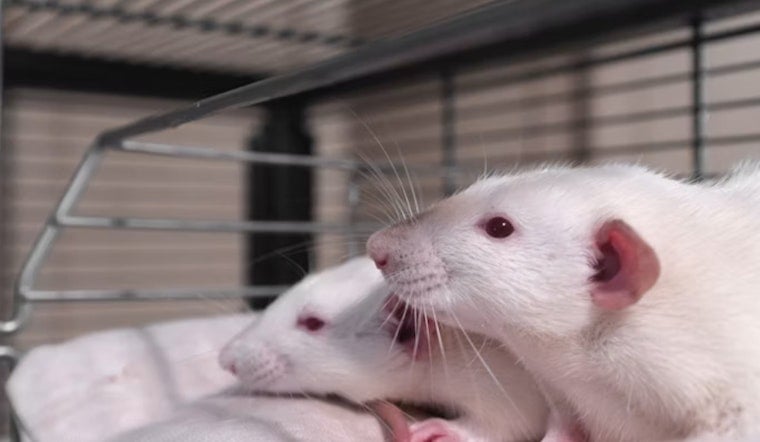
UC San Diego scientists think they may have found a new way to help brains under siege. In mice with TDP-43 proteinopathy, an experimental gene therapy called SynCav1 preserved learning and memory, protecting neurons without even trying to clear the toxic protein that is causing the damage.
Instead, the treatment boosted a protective protein inside neurons and kept fragile structures like mitochondria and membrane lipid rafts intact, both of which are essential for synaptic signaling. The results are early and strictly preclinical, but they give local researchers a fresh neuron-centric strategy to slow cognitive decline while longer-term human testing is still on the horizon.
Study Details And Results
The peer-reviewed study, published May 26 in Alzheimer's & Dementia, tested systemic delivery of an AAV-PhP.eB vector carrying synapsin-promoted caveolin-1, known as SynCav1, in mice engineered to express pathological TDP-43.
According to the authors, SynCav1 increased caveolin-1 throughout the brain and spinal cord, stabilized membrane lipid rafts and mitochondrial structure, and reduced phosphorylated TDP-43 in the cortex and hippocampus. Behaviorally, treated mice held on to measures of learning and memory that typically erode when TDP-43 goes haywire.
The team also reports that the AAV-PhP.eB vector crossed the blood-brain barrier efficiently, leading to central nervous system wide neuronal protection without directly removing TDP-43 from cells. In other words, the therapy focused on making neurons tougher, not on scrubbing out the toxin.
A Neuron-Centric Strategy, Not A 'Protein Cleaner'
Rather than chasing every misfolded protein deposit that shows up in the brain, the UC San Diego group is pitching SynCav1 as a way to reinforce neurons so they can better withstand toxic stress. Senior author Brian Head told The San Diego Union-Tribune that the aim is to "buy time for patients, potentially extending life by five or 10 years."
Co-author Shanshan Wang and colleagues echoed that framing in a university release from UC San Diego News, explaining that SynCav1 appears to preserve the molecular machinery neurons rely on to communicate. That includes membrane lipid rafts and mitochondria, which likely helps explain why cognition was better preserved in treated mice.
At the same time, the researchers stress that these are still mouse data, not a ready-for-prime-time treatment. They caution that translating the findings to people will require substantial additional work on dosing, delivery and safety.
Next Steps And Local Context
SynCav1's inventors at UC San Diego have already licensed the approach for further development. In industry materials the therapy appears under names like ET-101 or SYNCAV1 and is being advanced by Eikonoklastes Therapeutics. Human trials and formal safety testing, however, have not yet begun.
The published paper lays out a list of unresolved questions, including optimal dosing, possible immune responses and long-term effects, underscoring why careful preclinical and regulatory work is needed before any clinical use. Local scientists say the findings fit into a broader shift toward strategies that focus on preserving neuron function, which could eventually complement existing dementia approaches aimed at clearing amyloid or tau.





