

























































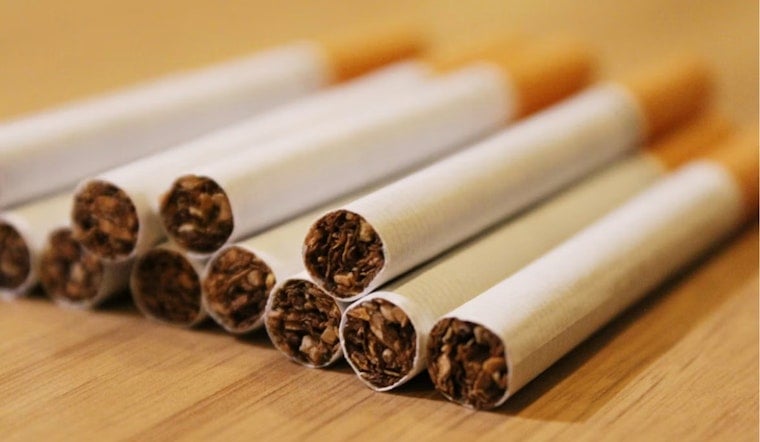
A new analytic essay from UC San Francisco researchers argues that Lunchables and other ultra-processed foods marketed to kids did not just appear as a clever snack idea. According to the authors, the same product design and behavioral science tools that Big Tobacco used to sell cigarettes were repurposed to build kid-friendly food trays, moving prototypes from lab benches to supermarket shelves through a carefully engineered corporate pipeline.
According to the American Journal of Public Health, lead author Laura A. Schmidt, PhD, draws on internal Philip Morris Companies documents to follow product development at Kraft and later Kraft-Heinz from 1985 through 2007. The paper details a 1988 "Technical Synergies Committee" and what the researchers describe as a systematic strategy for shifting people, tools and technologies across tobacco, alcohol and food divisions. It also notes funding from the National Institutes of Health, the National Science Foundation, the U.S. Department of Agriculture and private philanthropies, and it explicitly cautions that the analysis does not establish direct causal links between Lunchables and specific health outcomes.
As reported by UCSF, the study relies on previously undisclosed corporate records housed in the UCSF Industry Documents Library, cross-checked against public statements and press materials. The university summary spotlights case studies where a pressurized CO2 extraction method, previously used in coffee decaffeination and nicotine manipulation, was adapted for fat removal in processed meats and cheeses. The researchers argue that these technical moves were combined with consumer testing that played to children’s desire for independence while reassuring parents about convenience and basic nutrition.
Tobacco Tech Turned Food Science
The analysis offers concrete examples of that crossover. Engineers adapted decaffeination and nicotine-removal techniques for food production, set up "brain-and-senses" sensory labs and used electronic-nose sensors to stabilize flavor in low-fat formulations. Market researchers worked alongside product teams to test and tweak dozens of prototypes before they hit the market. As The Guardian reported, internal notes describe a culture of "consumer-driven product development" in which executives talk about "excavating" demand rather than creating it. According to the paper, those tactics closely mirror approaches tobacco companies relied on to keep people consuming and to weather public health backlash.
Lunchables, Schools And The Corporate Playbook
Lunchables rolled out nationally in the late 1980s as Kraft General Foods expanded under Philip Morris ownership, then grew into a staple brand through the 1990s and 2000s. In 2023, The Washington Post reported that Kraft-Heinz reformulated two Lunchables so they met National School Lunch Program rules and were eligible to be served to nearly 30 million children. That move set off a fresh debate over what belongs on school lunch trays.
The experiment did not last. Kraft-Heinz pulled those school-menu items in November 2024 after saying demand "did not meet our targets," a retreat covered by ABC News. The short-lived foray into cafeterias now sits in a larger story about how aggressively engineered products for kids intersect with federal nutrition programs.
Why Public Health Researchers Are Alarmed
Coverage of the American Journal of Public Health special issue pairs this historical deep dive with recent epidemiology that links high intake of ultra-processed foods to higher risks of chronic disease. During a press briefing summarized in The Guardian, Harvard nutrition researcher Cindy Leung pointed to observational studies that found higher dementia and cognitive-impairment risks among people who consume a lot of ultra-processed foods.
Advocacy groups and public health organizations argue that the parallels to tobacco are strong enough to justify tougher rules, from taxes and warning labels to stricter limits on marketing to children. That push for tobacco-style treatment of ultra-processed foods is echoed by the Environmental Working Group, which has called for policymakers to take the new evidence seriously.
What Could Change
According to the American Journal of Public Health, Schmidt’s essay does not propose specific legal fixes, but it plainly suggests that tobacco-style tools such as warning labels, fiscal measures and marketing restrictions aimed at children deserve serious consideration. The authors also note that tobacco litigation forced internal records into the public domain, and they suggest those archives could serve as a model for future investigations into ultra-processed food manufacturers.
The paper does not attempt to measure health outcomes linked solely to Lunchables. Instead, it reframes product design as a commercial determinant of health that warrants close scrutiny. For parents, school officials and policymakers, the message is that the science and strategy behind some children’s foods may be more deliberate and more orchestrated than many realized.




