

























































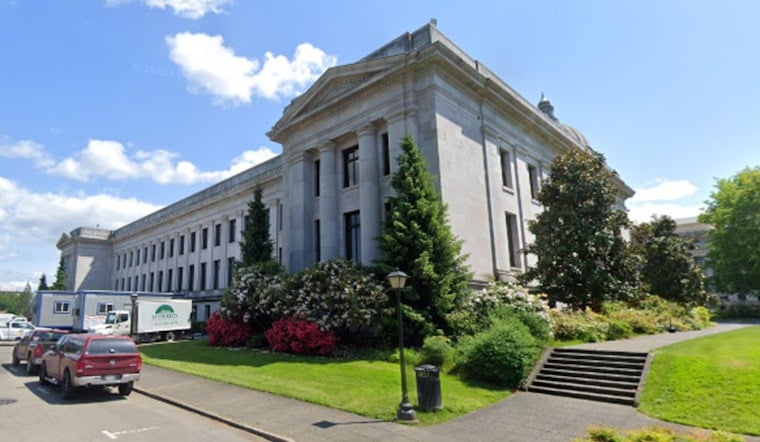
Meta just lost its long-running fight with Washington’s campaign watchdogs. On Thursday, the state’s Supreme Court left in place a multimillion-dollar judgment against the tech giant, concluding that Meta violated Washington’s Fair Campaign Practices Act by failing to keep and share required records on political ads.
Governor Bob Ferguson, who says he brought the case while serving as attorney general, took a bit of a victory lap on his own platform of choice: Facebook. In a post praising “great work by the AG's office,” he called the outcome “the largest campaign finance penalty in U.S. history, by a mile.” Ferguson noted that the opinion was filed on June 18, 2026, and pointed readers to the court document in the comments. Governor Bob Ferguson on Facebook
High Court Affirms Earlier Rulings
The Supreme Court’s decision arrives after years of lower-court rulings that went against Meta. A probe by the state’s Public Disclosure Commission eventually landed in court, where judges repeatedly found that Meta failed to preserve and disclose detailed information about political advertising sold on its platforms. According to the Washington State Public Disclosure Commission, appellate decisions had already upheld the trial court’s judgment before the case reached the state’s highest bench.
At trial, King County Superior Court concluded that Meta broke the disclosure law 822 times and hit the company with the maximum $30,000 penalty for each violation, for a total of about $24.66 million. The court also trebled roughly $3.5 million in attorney fees to about $10.5 million, for an approximate $35.1 million judgment that subsequent courts left intact. The trial findings and penalty calculation were detailed by the Associated Press.
First Amendment Fight and Industry Briefs
Meta has argued throughout the appeals that Washington’s disclosure rules place an unconstitutional burden on speech. The company pressed that First Amendment theory again before the Supreme Court, framing the requirements as too onerous for a modern ad platform. Coverage of the appeal highlighted those arguments, and the court’s docket shows that trade groups and advocacy organizations weighed in as well. Amicus briefs came from groups including NetChoice and the Institute for Free Speech, according to the Washington State Standard and Washington State Courts.
What It Means in Washington
Supporters of strict disclosure rules say the law is about basic sunlight for voters: who is paying for political messages, how much they are spending, and which audiences are being targeted. The Public Disclosure Commission notes that any fines collected in cases like this flow into the state’s Public Disclosure Transparency Account, not back to the agencies that brought the case. Both the commission and the Attorney General’s Office have described the statute as content-neutral, since it focuses on recordkeeping and public inspection rather than on what the ads actually say. Washington State Public Disclosure Commission
Legal Implications
The fight has effectively turned an old-school transparency law into a test case for the algorithmic age. Courts have now signaled that Washington’s decades-old disclosure rules can reach targeted digital ads, which could encourage similar enforcement in other states watching from the sidelines. Because Meta pushed its First Amendment objections throughout the appeals, the case has drawn national interest from tech trade groups and policy advocates who may try similar arguments elsewhere. Courthouse News Service
With the state Supreme Court’s filing, the Washington court phase appears to be over. As Ferguson’s post notes, anyone who wants the blow-by-blow can dive into the opinion itself. For now, the ruling leaves in place one of the largest campaign-finance penalties in U.S. history and keeps the spotlight firmly on how transparency rules are enforced in the modern digital ad marketplace.



