

























































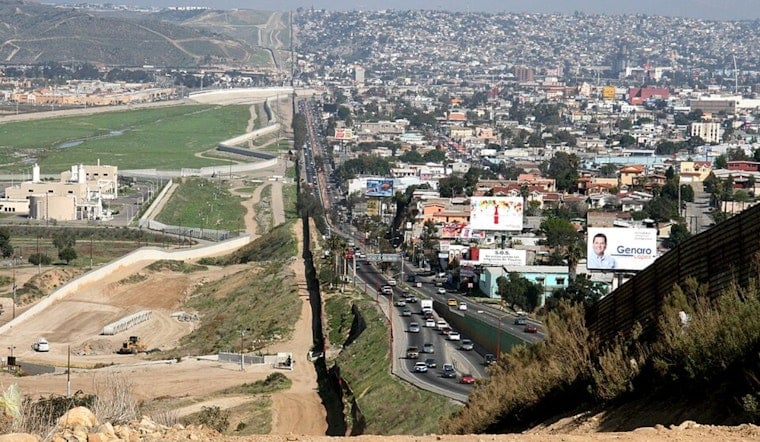
A San Diego County man who says a missed freeway exit accidentally pushed him into Mexico is now at the center of a gun-rights fight in California. After spending six days in a Mexican jail, he has sued state Attorney General Rob Bonta, asking a court to declare that his Mexican conviction does not strip him of the right to own firearms under California law. Until that happens, the complaint says, he cannot exercise his Second Amendment rights and is stuck waiting for official clarity.
According to a newly filed complaint obtained by Times of San Diego, plaintiff Thomas Close says his navigation app missed the last U.S. exit on southbound Interstate 5 and routed him straight into Mexico. Close, who held a California concealed-carry permit, says he had a Heckler & Koch P2000 V3 handgun, a magazine and ammunition in his vehicle when he crossed the border. He says he turned himself in to Mexican authorities, who detained him and kept him behind bars for six days.
The lawsuit states that on April 3, 2025, Close agreed to plead, paid 10,000 pesos and surrendered the gun and ammunition to secure his release. A Mexican court initially sentenced him to three years, but the complaint says the prison term was later lifted and he was allowed to return to the United States, where his status would be treated as that of a felon.
California Penal Code section 29800 makes it a felony for anyone convicted of a felony in any other state, government, or country to possess a firearm, and the statute carries potential penalties that include prison time and fines, according to the California Penal Code.
What the suit asks for
Close's complaint asks the court for a declaratory judgment that his Mexican conviction does not disqualify him under section 29800. It also seeks an order requiring a clear agency determination so that he can lawfully regain his firearms rights.
Depending on how a judge interprets the statute, a ruling in Close's favor could prompt state authorities to clarify how foreign convictions are treated under California firearms law. Or the decision could leave the broader issue unresolved for other people with overseas cases hanging over their gun rights.
Border travel risks
Federal travel guidance has long warned that taking firearms or ammunition into Mexico without Mexican permits is a serious crime, a warning that Close's case appears to underline for drivers who cross the border unintentionally. The U.S. government notes that American permits and concealed-carry licenses have no legal effect in Mexico and advises travelers to follow local laws and each country's entry and exit rules, according to the U.S. Department of State.
What happens next
The lawsuit is now pending and will work its way through the courts, where a judge will decide whether California's firearms-disqualification statute applies to the Mexican plea at issue. For the moment, Close remains in legal limbo. His case could become an early test of how state law treats foreign convictions and how far written agency guidance can go in answering that question.





