

























































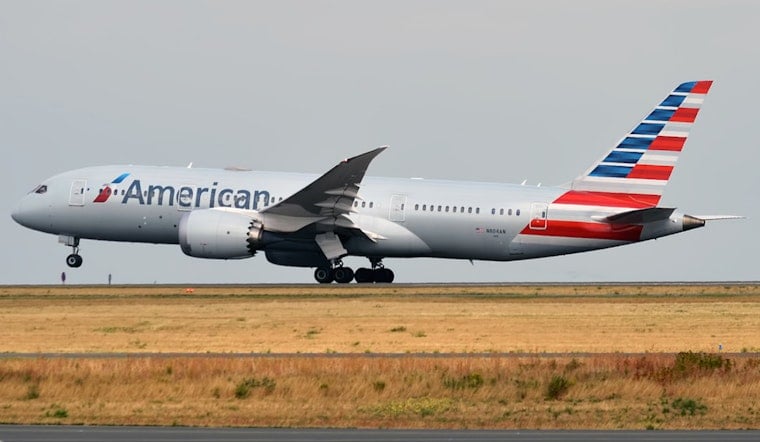
An American Airlines flight from Zurich to Philadelphia declared an in-flight emergency Monday and broke off its Atlantic crossing over the North Sea, diverting to London Heathrow. The crew set the standard emergency transponder code, began a rapid descent, and later brought the jet into Heathrow, where it reached a gate. Officials and the airline have not publicly said what triggered the midair scare.
Emergency declared midflight
According to AirLive, the Boeing 787-8 left Zurich Airport at 11:54 a.m. CEST. About 1 hour and 15 minutes into the trip, the crew squawked 7700 and told air traffic control the aircraft was descending. AirLive reports that controllers gave the flight priority handling while the pilots arranged a diversion to London Heathrow, and the airline confirmed to the outlet that the jet was heading for LHR instead of Philadelphia. The outlet’s live updates followed the approach into Heathrow and reported the aircraft coming to a stop at a terminal shortly after landing.
Flight-tracking data show diversion and landing
Public flight-tracking data recorded the aircraft turning back and routing into London, with the journey labeled as a diversion rather than a transatlantic crossing. Flightradar24 lists AA93’s June 22 entry as diverted to LHR and shows the flight arriving in the early afternoon local time. The altered track lines up with the emergency callout over the North Sea that aviation outlets reported earlier in the day.
What a squawk 7700 means
Every aircraft transponder broadcasts a four-digit code that tells controllers who and where a plane is. Punching in 7700 is the global signal for a general emergency and tells air traffic control to move that flight to the front of the line, according to guidance in ICAO's NAT Doc 007. The code does not spell out what kind of problem the crew is facing, only that they need urgent handling. Pilots use 7700 for everything from sudden medical issues in the cabin to technical problems, and controllers then work to carve out a safe route to the nearest suitable airport.
The jet and next steps for passengers
Public aircraft databases list the airframe on this routing as a Boeing 787-8 registered N882BL. PlaneFinder identifies N882BL as a 787-8 in American’s long-haul fleet and shows it operating recent Zurich-Philadelphia services. After any diversion, airport and airline teams typically focus first on any immediate medical response and a technical check of the aircraft. At the time of reporting, there were no official details on injuries, rebooking plans, or when the jet might return to service.
Where things stand
Aviation tracking sites and the airline’s own systems remain the quickest way to see how operations shake out as ground crews assess the 787 and any affected passengers. Flightradar24 and other monitors continue to update the flight’s status while the aviation world waits for formal statements from officials or the carrier. This story will be updated as new information is released.



.jpg)