

























































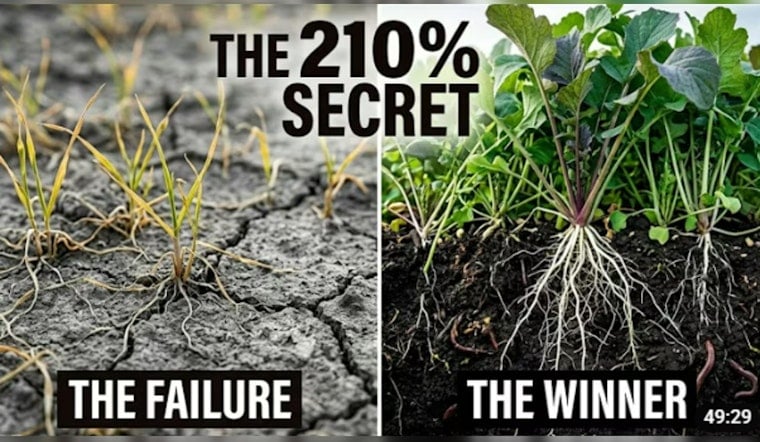
A viral YouTube clip that sounds like cover crop science fiction has been flatly rejected by the University of Minnesota Extension. The video claims the university ran a six-season, 41-mix cover-crop trial and found a three-species mix that “outperformed every other combination by 210%.” Extension educators say that trial never happened and are warning growers not to treat the clip as real research.
What the viral clip claimed
The video, titled “Scientists Tested 41 Cover Crop Mixes for 6 Years,” was posted May 6 by a channel called Soil & Centuries and, according to the Twin Cities Pioneer Press, had about 36,000 views by mid-July, as reported by Pioneer Press.
In the clip, the narrator claims University of Minnesota researchers tracked nitrogen transfer, mycorrhizal network density and weed suppression across “hundreds of thousands of data points.” One three-species mix is said to have outperformed every other combination by 210%, neatly packaged as the supposed magic formula for cover crops. Extension staff say none of it is grounded in actual university work.
University responds
In a statement to the Pioneer Press, University of Minnesota Extension called the clip AI-generated “slop” and said the research it describes does not exist. Extension educators told the paper they first noticed the video when it had roughly 11,000 views and flagged it for colleagues as a problem.
What this means for farmers
Cover-crop research is highly site-specific. Soil type, climate, seeding rate and termination timing all influence results, which is why growers typically rely on local trials and Extension guidance rather than one-size-fits-all prescriptions from the internet.
Extension staff say dramatic, single-number claims are a red flag. Before changing practices based on a slick video, they encourage producers to look for peer-reviewed papers backing the work or to contact their county educator and talk through the evidence.
How to spot a fake study online
There are some basic checks that help separate real science from AI-fueled fantasy. Look for author names and institutional affiliations, a DOI or clearly published paper, transparent methods and accessible datasets. If those pieces are missing, that absence is a warning sign.
If a viral clip makes sweeping promises, farmers and other viewers are urged to reach out to a local extension office or search university research pages to confirm the work before adopting new practices.
The episode is a reminder that generative AI can stitch together plausible-sounding science that never actually occurred, which raises the stakes for skeptical reading and direct verification. For full reporting and more quotes from Extension staff, see the Twin Cities Pioneer Press.



