

























































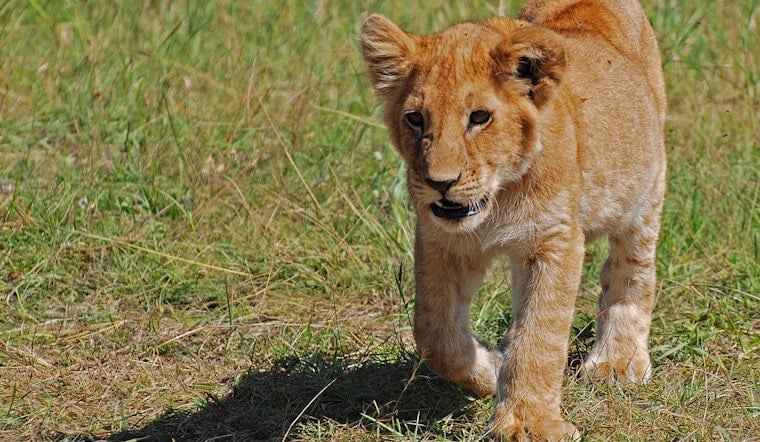
Taras the lion survived a war zone as a cub, smuggled out of Ukraine in a duffel bag, only to nearly lose his life years later to something far less dramatic: a fungus lurking in the dirt of his Minnesota home. The 3-year-old is now recovering from fungal pneumonia at The Wildcat Sanctuary in Sandstone, after months of treatment that cost the nonprofit at least $20,000.
A Rescue Two Years in the Making
Taras was one of several lion cubs found abandoned during the first year of Russia's invasion, rescued from a Ukrainian train station and eventually relocated to the sanctuary in 2022, according to The Minnesota Star Tribune. The journey out of the war zone was coordinated by the International Fund for Animal Welfare, whose volunteer veterinarian, Dr. Andrew Kushnir, cared for the cubs during a 36-hour trip to Poland before they were flown to Minnesota, according to a statement from the International Fund for Animal Welfare. Taras now lives with fellow rescued lions Lesya, Stefania and Prada in Pine County, per the same account.
A few months before the Star Tribune's report, Taras stopped eating. Veterinary tests found fungal pneumonia — his lungs were filling with blastomycosis spores, a noncontagious infection caused by inhaling spores in disturbed soil that is found in many parts of Minnesota, especially the northeastern part of the state, the paper reports. Sanctuary staff began bringing him inside at night for medicine and kept him indoors entirely when summer wildfire smoke made the air unsafe to breathe, the outlet's report notes.
Months of Costly, Intensive Treatment
Taras received intravenous drug infusions to fight the infection before staff switched him to cheaper oral medication once he began eating again, the Star Tribune reports. The sanctuary spent at least $20,000 on his care over several months. None of the sanctuary's other animals showed signs of blastomycosis, according to the same report, even though the facility is home to roughly 160 cats, including lions, tigers, cougars, jaguars, cheetahs, leopards, bobcats, servals, caracals, Asian leopard cats and ocelots.
Two months after falling ill, Taras recovered enough to reunite with his pride in June, the outlet's report notes. Sanctuary founder Tammy Thies said the organization was cautiously optimistic about his recovery and credited early detection with giving him a fighting chance. Thies has been sharing Taras's story publicly to raise awareness of blastomycosis, calling him a symbol of resilience, per the same account.
Original Rescuer Returns to Check On Him
In June, Dr. Kushnir — the same volunteer veterinarian who treated Taras during the harrowing evacuation from Ukraine years earlier — visited The Wildcat Sanctuary in person to check on the lion as he recovered from the fungal infection, according to The Wildcat Sanctuary. The visit reunited Taras with a member of the international rescue team that first got him out of the war zone, underscoring the long thread connecting his wartime survival to his recovery in Pine County.
The sanctuary itself, founded by Tammy Thies in 1999, is a 40-acre, closed-to-the-public nonprofit that holds dual accreditation from the Global Federation of Animal Sanctuaries and the American Sanctuary Association. That accreditation matters under the federal Big Cat Public Safety Act, enacted in December 2022, which banned private big cat ownership and cub-petting activities nationwide while exempting accredited nonprofit sanctuaries that do not breed or trade animals, according to the U.S. Fish and Wildlife Service. The law has made accredited facilities like the one in Sandstone increasingly central to housing rescued exotic wildlife.
A Growing Fungal Threat Across Minnesota
Taras's illness is not an isolated scare. A white tiger died of a blastomycosis infection at a Wisconsin wildlife zoo in June 2026, the Star Tribune reports, and blastomycosis can sicken or kill people, dogs, cats and big cats alike. The Minnesota Department of Health has tracked more than 1,000 human blastomycosis cases and more than 100 related deaths since 1999, along with almost 3,000 cases in dogs and cats — about a quarter of which proved fatal, according to the same report.
State health data shows the threat is intensifying. The statewide incidence of human blastomycosis rose to 1.5 cases per 100,000 people in 2024, more than double the 1999–2023 annual median rate of 0.64 cases per 100,000, according to the Minnesota Department of Health. Pine County itself, where the sanctuary sits, recorded 12 confirmed human cases between 1999 and 2023, including a localized cabin-related outbreak that produced six cases between 2019 and 2022, the department's surveillance records show.
Diagnosing the illness quickly is notoriously difficult. A study published in Emerging Infectious Diseases and cited by the Centers for Disease Control and Prevention found a median diagnostic delay of 31 days in Minnesota blastomycosis cases from 1999 to 2018, with 61% of patients not tested until after hospitalization. Researchers say the fungus thrives in moist, acidic soil near waterways, and that climate shifts including increased rainfall and warming temperatures are expanding the spores' range across northern regions. Minnesota and Wisconsin have historically accounted for 75% of all reported blastomycosis cases in the United States, with national incidence rates growing 2.4 times between 2013 and 2023, per CDC surveillance data.
Against that backdrop, catching Taras's infection early was critical to his survival, giving him a fighting chance his caretakers say he might not have otherwise had. The sanctuary has weathered scrutiny before: in April 2014, it entered a settlement with the Minnesota Attorney General's Office to overhaul its financial practices following an investigation into misspent funds, though Thies remained executive director after reimbursing personal expenses, according to MPR News. More than a decade later, the facility's focus is on a lion who survived a war zone and, now, a fungus that has quietly become one of Minnesota's fastest-growing public health concerns.





