

























































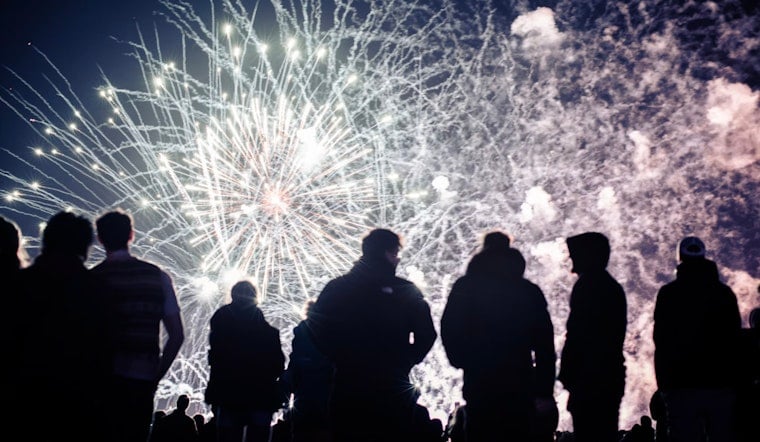
Planning to light up the Atlanta sky this July 4 weekend? Before you turn your cul-de-sac into a DIY fireworks show, know that Georgia treats those backyard bursts more like regulated explosives than party favors. State law spells out who can buy them, when they can be launched and where they are flat-out banned, and local governments have started tightening the rules near horse properties.
How to buy and who can handle them
Under Georgia law, consumer fireworks have to be bought in person, and buyers must show government-issued ID. Resale and retail-stand operations are tightly regulated. You have to be at least 18 to purchase fireworks, and 16- and 17-year-olds are limited to serving as assistants to licensed distributors. Those age and purchase rules are laid out in the state’s fireworks code, summarized on Justia.
When you can set them off
Statewide, and absent stricter local rules, Georgia generally allows consumer fireworks from 10 a.m. to 11:59 p.m. On certain holidays, including the July 3–4 window, those hours are extended and local noise ordinances have limited power to shut down the show during that period. On ordinary days, though, cities and counties can still enforce their own noise rules, so it is worth a quick scan of your local code before you start lighting fuses at night. The timing rules are detailed in state law, which you can read on FindLaw.
Where you can't light them
Even on holidays, there are hard no-go zones. Georgia bans igniting fireworks indoors and within the rights of way of roads and railroad tracks. They are also prohibited within specific distances of facilities such as electric plants, water-treatment facilities, hospitals, prisons and certain fuel-storage sites. State parks and many city parks and historic sites generally do not allow consumer fireworks at all unless a special permit is granted.
One more bright line: it is illegal to ignite fireworks while under the influence of alcohol or drugs. The full list of restricted locations and conditions is laid out in Georgia’s fireworks statute, available on Onecle.
New 'near-horses' rules and local bans
In 2025, state lawmakers gave cities and counties the option to ban fireworks within 200 yards of properties that house equines. The bill language is posted on LegiScan. Several north Georgia communities have already taken them up on it. The City of Milton, for example, has adopted a 200-yard buffer around qualifying horse properties, and Cherokee County folded a similar restriction into its noise ordinance.
If you live anywhere near stables, that buffer could put your own yard in the no-fireworks zone. Check your local government’s site for the exact lines on the map, such as the pages for Milton and Cherokee County.
What safety experts say
Fire-safety groups would strongly prefer that your fireworks intake be limited to watching a professional show. The National Fire Protection Association says the safest way to enjoy fireworks is at a licensed public display, not in the driveway.
The U.S. Consumer Product Safety Commission’s 2022 report estimated about 10,200 emergency-department-treated fireworks injuries that year. Among children under 5, sparklers alone accounted for roughly 29 percent of the injuries. The NFPA also notes that fireworks spark tens of thousands of fires annually. For the full data and safety guidance, check out the National Fire Protection Association safety sheet and the U.S. Consumer Product Safety Commission 2022 report.
Quick safety checklist
If you are staying home with legal consumer fireworks, safety officials repeat the same basic playbook every year:
- Light only one device at a time.
- Keep a bucket of water or a garden hose within arm’s reach.
- Wear eye protection while you are lighting devices.
- Never try to relight a “dud.” Wait, then soak it thoroughly.
- Soak used and unused fireworks for several hours before throwing them away, following guidance from local fire departments.
And remember, using fireworks while impaired is illegal in Georgia and can lead to criminal or administrative penalties on top of any damage you might cause.
Enforcement and penalties
Enforcement is a tag-team effort between state and local authorities. The state Safety Fire Commissioner can levy civil penalties and revoke distributor licenses for violations, while counties and cities typically attach fines or misdemeanor charges to illegal use in their ordinances.
Jurisdictions that adopt the equine buffer include enforcement provisions in their codes, and repeat or commercial violations can trigger steeper fines or licensing actions. For a concise overview of the state’s fireworks rules and how they are enforced, see FOX 5 Atlanta.




