

























































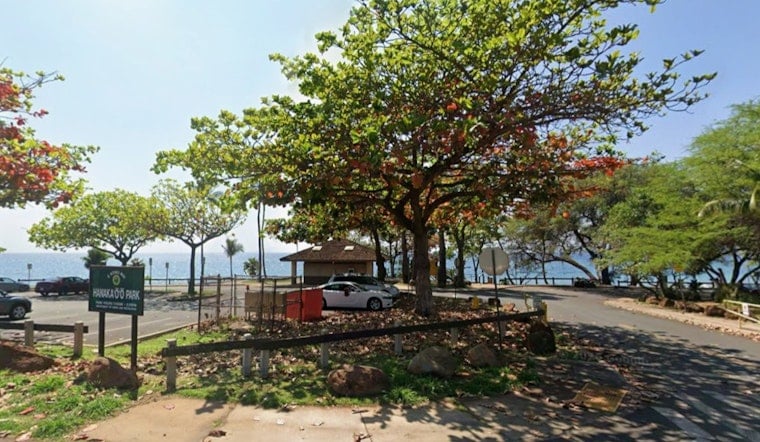
Swimmers at one of Maui’s most popular ocean playgrounds are being told to hit pause, after routine testing turned up elevated bacteria levels at Hanakaoʻo Beach Park along the Kaʻanapali shoreline in Lahaina.
State health officials said Saturday that recent samples showed an exceedance of enterococci in the water, prompting a brown-water style advisory for the stretch around Canoe Beach. The alert identifies familiar landmarks along the zone, including the Lahaina Canoe Club, Honoapiʻilani Highway, the Kaanapali Beachwalk, the Drums of the Pacific luau and the Hanakaoʻo cemetery. Officials warned that swimming in water with elevated bacteria can make people sick, and signs will stay up while follow-up testing is completed.
The Hawaiʻi State Department of Health posted the notice on X, flagging the exceedance and directing the public to its online Clean Water Branch advisory viewer for sampling details and status updates, according to the Hawaiʻi State Department of Health. The post spelled out the affected Kaʻanapali shoreline landmarks and reiterated that warning signs would remain in place during additional sampling. Officials also reminded beachgoers that pollution in nearshore waters can lead to illness, and urged residents and visitors to check the state’s advisory tool before heading into the ocean.
What Enterococci Readings Mean
Enterococci are a fecal-indicator bacterium, used by regulators as a red flag for possible sewage or runoff contamination in recreational waters. The Environmental Protection Agency’s recreational water criteria use a statistical threshold value of 130 colony-forming units per 100 milliliters as a warning level. According to the EPA's 2012 Recreational Water Quality Criteria, going over that threshold typically triggers resampling and a public advisory until readings drop back below the limit.
An enterococci exceedance does not pinpoint a specific pathogen or prove that a particular source, such as a pipe or a single storm drain, is to blame. It does, however, signal a higher risk that swimmers could develop gastrointestinal or other infections if they enter the water while readings remain elevated.
Maui's Beach History
Hanakaoʻo is no stranger to warning signs. Local coverage and statewide tracking tools have documented recurring high-bacteria readings along the Kaʻanapali corridor during 2026 and in previous years. Maui Now has reported earlier high readings at Hanakaoʻo, and independent monitors such as Safe to Swim Hawaii have noted an elevated-risk pattern after heavy rains.
Those repeated advisories have kept alive an ongoing conversation among residents and scientists about what is driving the problem, with runoff, groundwater discharge and upstream wastewater often cited as likely contributors to recurring nearshore contamination.
What Beachgoers Should Do
Health officials are urging people to stay out of the posted waters until the advisory is lifted, especially children, older adults, pregnant people and anyone with a weakened immune system. Beach users are also being asked to follow the instructions on warning signs and listen to lifeguards while the Clean Water Branch carries out follow-up sampling.
For broader information on recreational-water illnesses and symptoms to watch for after ocean exposure, the public can consult the Centers for Disease Control and Prevention. Updates on this advisory, including new sample results, will be posted on the state’s online beach-monitoring map and alert system, available through the Clean Water Branch advisory viewer.



