

























































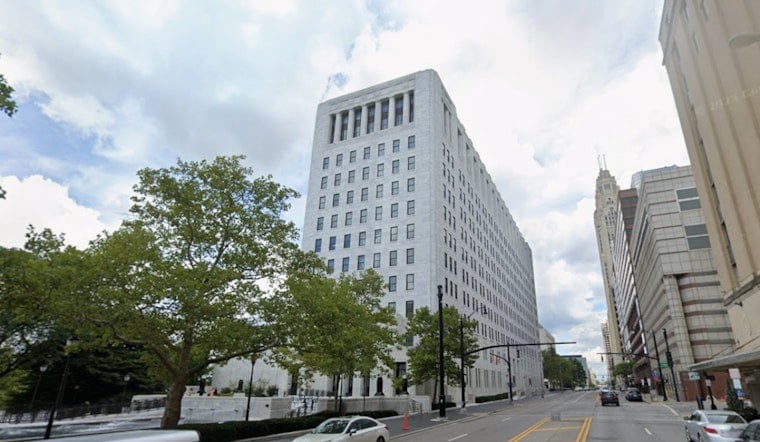
Ohio's top court has shut down a wrongful-death lawsuit against the city of Berea, ruling on July 8, 2026 that the city cannot be sued over a deadly fall at the Berea Recreation Center. The 2018 incident involved a senior swim-class participant who tripped over a locker-room bench and later died, but the Ohio Supreme Court said the bench did not qualify as a "physical defect" under the state's political-subdivision immunity law. The justices reversed the Eighth District Court of Appeals and sent the case back to the trial court with instructions to enter summary judgment for Berea, as the Supreme Court of Ohio explained.
What the high court said
Writing for the majority, Justice Megan E. Shanahan said a "physical defect" must be a tangible imperfection that interferes with how something is supposed to work. The bench at issue was newly installed and had no such flaw, the court found. In other words, the problem, as the city saw it, was not that the bench was broken or damaged, but that some users found its design hazardous in a tight space, according to the Supreme Court opinion.
The case's path
According to the appellate record, the fall occurred on April 18, 2018, when 83-year-old Joan Steigerwald tripped on a leg of the bench in the women's locker room and died 12 days later. The file reflects about 14 prior complaints that the bench legs were a tripping hazard, including two written complaints submitted on April 15 and 16, 2018. Her estate sued the city in 2020. The trial court granted Berea summary judgment in May 2022, but the Eighth District reversed, which pushed the dispute up to the state high court, as detailed in the Eighth District Court of Appeals’ opinion.
Bench design and member complaints
The recreation director chose a bench model with legs that extended roughly 5.75 inches beyond the seat. On paper, it looked like a practical choice: the bench was antimicrobial, movable and compatible with the center's cleaning equipment. But in real-world use, some members and staff said those extended feet were easy to trip over. Even so, the Supreme Court concluded that reports of people stumbling on the bench did not transform a functioning piece of equipment into a legally recognizable physical defect under the immunity statute, according to the Supreme Court opinion.
Where judges split
The majority leaned on a plain-meaning reading of R.C. 2744.02(B)(4), saying courts should look for design flaws, damage or deterioration, rather than second-guessing policy decisions about which functional item a city buys or where it places that item. In dissent, Justice Jennifer Brunner said the record told a different story. She pointed to the member complaints and the change from the prior bench and argued there were factual disputes a jury should sort out, as Court News Ohio summarized.
Legal implications
The ruling narrows the route for plaintiffs trying to get around municipal immunity. Alleging that a city picked a bench model that proved risky in a cramped locker room, by itself, will not satisfy the "physical defect" exception. The governing statute is found at R.C. 2744.02(B)(4), and the appellate record identifies Todd O. Rosenberg and Amy L. Higgins as counsel for the Steigerwald estate, according to the Eighth District record.
The Supreme Court's remand for entry of summary judgment in Berea's favor effectively closes this particular line of attack on the city in the Steigerwald case. The split decision also signals that, going forward, courts will expect plaintiffs to show a concrete, tangible defect in public property, not just a risky placement of otherwise functional equipment, before they can pierce political-subdivision immunity, as reported by Court News Ohio.




