

























































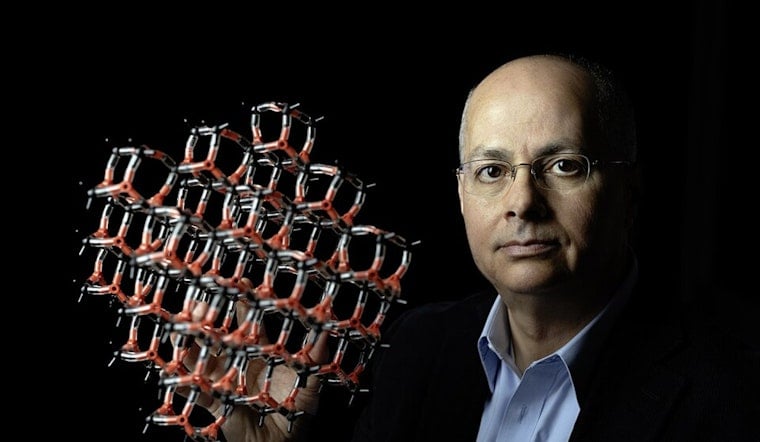
Omar M. Yaghi, the Nobel Prize-winning materials chemist who has long been a star at UC Berkeley, is leaving town for a full-time role at Tsinghua University in Beijing, where he will run a new AI-driven materials institute. It is a headline-grabbing win for Tsinghua and a gut-punch loss for the Bay Area research scene. Yaghi says the move will let him chase an aggressive, AI-first research agenda aimed at slashing the time it takes to invent and deploy new materials.
New institute and appointment
Tsinghua said in a statement that Yaghi will lead the university-level AI Chemistry and Materials Research Institute, known as AIMATRY (AI × Materials × Chemistry), and will help build an intelligent R&D system that can shrink the development cycle for new materials by roughly an order of magnitude, according to Tsinghua University. The move was first detailed by the Los Angeles Times, which noted that Yaghi has been an honorary professor at Tsinghua since 2022.
His Nobel-winning work
Yaghi shared the 2025 Nobel Prize in Chemistry for pioneering metal-organic frameworks (MOFs), a class of highly porous crystals with uses that range from carbon capture to pulling drinking water out of dry desert air, according to The Nobel Prize. Those materials now sit at the core of several commercial efforts, including air-to-water systems that have drawn serious attention from both industry players and investors.
Why he moved
Yaghi has not been shy about saying that shrinking U.S. research support factored into his decision. In a recent interview, he told Scientific American that the current state is not so encouraging because of the cutting back on grants and support of science by the very agencies that many university researchers rely on." He has also cast the move to Beijing as a chance to "build a new paradigm by tightly fusing AI with chemistry and materials science.
Part of a larger trend
Experts say Yaghi’s jump is not happening in a vacuum. It aligns with a broader push by Chinese universities and institutes to attract international talent to accelerate AI-enabled science. That race for brainpower, and its contrast with U.S. budget fights over research spending, has been highlighted in reporting by Nature, which points to several other high-profile moves in recent months.
What this means locally
Yaghi has been on Berkeley’s faculty since 2012 and has held joint appointments with Lawrence Berkeley National Laboratory, according to UC Berkeley News. He is also the founder and chief science officer of Atoco, an Irvine-based startup working to commercialize MOF-powered air-to-water systems. The Orange County Business Journal reports the company plans to start taking preorders later this year. His departure strips the local ecosystem of a marquee scientist, fundraiser, and lab-builder at a moment when campus research groups are already grappling with tighter budgets.
Where he goes from here
At his Tsinghua appointment ceremony last Friday, Yaghi told the crowd, "The molecules are calling me forward once more — with renewed energy, renewed purpose," according to Tsinghua University. Whether his move sets off a broader wave of similar exits from U.S. campuses is an open question, but the hire underscores how fiercely universities around the globe are now competing for researchers who can bridge AI and hands-on laboratory science.




