

























































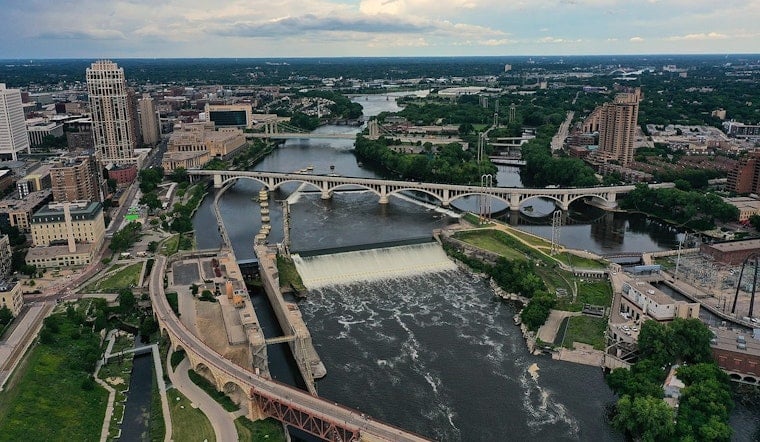
Buried beneath the roar of St. Anthony Falls, a 150‑year‑old concrete cutoff wall has quietly been doing its job in downtown Minneapolis, holding the falls in place and keeping the river in check. After a two‑year hazard assessment, researchers say there is no sign the structure is on the verge of collapse. Still, they warn that the wall is difficult to observe directly, its legal owner is unresolved, and some failure scenarios could pack a serious punch for nearby infrastructure. In other words, the near‑term risk looks low, but there is enough uncertainty that officials want continued monitoring, real planning, and someone clearly in charge.
What researchers found
The St. Anthony Falls Laboratory led a suite of geophysical surveys, drone inspections inside tunnels, and physical modeling to understand how the roughly 6‑foot‑wide, 40‑foot‑tall cutoff wall is holding up. According to the University of Minnesota, the team did not detect any evidence of active "piping" (groundwater eroding the sandstone) during tunnel inspections and delivered a formal risk assessment to the Legislature after two years of work. Even so, researchers stressed that limits on direct observation leave important unknowns, which is why they are pushing for continued monitoring instead of a one‑and‑done study.
Officials urge calm, but preparedness
Local emergency managers are trying to thread the needle between reassurance and urgency. The situation is not an immediate crisis, they say, but it is serious enough that officials cannot simply shrug and walk away.
"There’s no reason to think that this is going to just fail tomorrow," Hennepin County emergency management director Eric Waage told the Star Tribune, while Minneapolis emergency director Rachel Sayre called the assessment "incredibly helpful" for understanding how likely different scenarios are. The Star Tribune also reports that the city maintains a multi‑day reserve of drinking water, and that the study warned a large sediment wave could re‑suspend historic industrial contaminants as it moves downstream toward Lock and Dam No. 1.
How it could unravel
Researchers laid out a two‑step worst‑case storyline. First, the limestone caprock at the falls would be compromised while the underlying sandstone remained. If that caprock later failed, rapid upstream erosion could follow, chewing its way back through the riverbed.
That logic mirrors earlier federal concerns about the Upper St. Anthony Falls complex and the U.S. Army Corps of Engineers disposition work around the site, which look at potential impacts to locks, dams, and nearby infrastructure, according to the U.S. Army Corps of Engineers. In the worst scenario, piers for the Third Avenue Bridge, hydroelectric equipment, and riverfront structures could be at risk, and navigable channels on the river could be disrupted.
Who’s responsible?
The simplest‑sounding fix may be the messiest: deciding who actually owns the buried wall. The report delivered to the Legislature called establishing custody of the cutoff wall "the most pressing issue," and local advocates with the Friends of the Mississippi River have tracked the tug‑of‑war among state, city, and federal interests.
Lawmakers are now stepping into the fray. U.S. Rep. Ilhan Omar added language to the House version of a Water Resources bill that would direct the Army Corps to retain ownership of the wall and perform an inspection within a year, according to the Star Tribune.
Recommendations and next steps
To avoid letting the report gather dust, researchers recommended installing sensors in subsurface tunnels, carrying out annual drone‑based lidar surveys, and building detailed emergency action plans with county and city partners. The assessment capped a state appropriation that provided $1 million to the University of Minnesota for a geophysical study and hazard analysis, according to the Revisor of Minnesota and listings at the Legislative Reference Library. Officials say the next moves involve clarifying legal responsibility and securing money to keep that monitoring going.
For now, Minneapolis officials are telling residents to stay tuned but not to panic. The study found no immediate danger while spelling out very concrete steps to cut long‑term risk. Expect more engineering details and policy debate as city, county, and federal partners work through the report and decide who will ultimately own, and pay for, the job of watching over the wall beneath the falls.




