

























































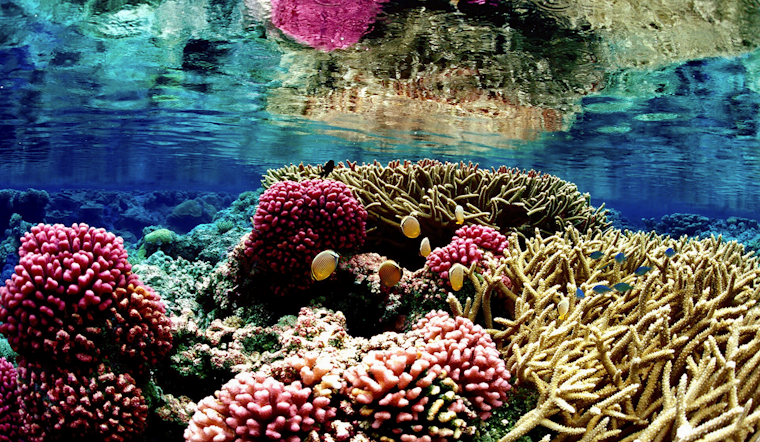
Human life on Maui is leaving a chemical fingerprint on the island’s reefs, and it is not a flattering one. A new study led by University of Hawaiʻi researchers finds that everyday pollution is quietly rewriting the chemistry inside coral tissues, stripping them of key nutrients and energy reserves and leaving them weaker when heat waves roll through.
The work links a stew of farm and household chemicals, industrial byproducts and pharmaceuticals building up inside corals to heightened stress and lower resilience. It also helps explain why some Maui reefs crashed far harder than others during recent mass bleaching episodes, even when they sat in the same overheated water.
Study maps chemical fingerprints across Maui reefs
In a paper published this month, the research team ran untargeted metabolomic analyses on tissue from 380 corals collected at 16 reef sites along roughly 70 kilometers of Maui’s west and south coasts, according to Nature Communications. The scientists focused on two common reef builders, Porites lobata and Montipora capitata, then compared the tiny molecules inside their tissues to what was happening on land nearby.
The pattern was stark. Metabolome composition, essentially each coral’s internal chemical profile, clustered tightly with the intensity of nearby land-use disturbance. At heavily impacted sites, corals showed depleted nitrogen and lower energetic potential, along with an enrichment of stress-related molecules that signal organisms are working overtime just to cope.
Twenty-five contaminants showed up in coral tissue
The team also found that human-made chemicals are not just swirling in the water, they are ending up inside the animals themselves. Researchers detected 25 anthropogenic contaminants in coral soft tissues, including agricultural chemicals, sunscreen components, pharmaceuticals and industrial byproducts, according to University of Hawaiʻi at Mānoa.
Lead author Zach Quinlan said that tracking the coral “metabolome” – the pool of small molecules inside coral tissue – could give managers a sensitive early-warning tool to pick up human impacts that are not obvious from a quick look at the water or the reef.
Linked to the 2015–2016 bleaching losses
The metabolomic fingerprints also line up with recent history. By comparing those chemical profiles with long-term records of coral cover, the researchers found that sites with the most heavily disturbed metabolomes were the same places that suffered the steepest coral declines after the 2015–2016 global bleaching event, according to Nature Communications.
NOAA’s Coral Reef Watch documented the 2015–2016 warming episode as a major global bleaching event that hit Hawaiian reefs hard, which gives regional context to the Maui results and suggests that pollution and heat can form a one-two punch.
What scientists say managers should do
Looking ahead, the authors recommend folding metabolome monitoring into existing reef surveys and testing whether boosting coral nitrogen and energy reserves can improve resilience, according to University of Hawaiʻi at Mānoa. Senior author Megan Donahue cautioned that anthropogenic contaminants “have broad cumulative impacts” that can quietly erode the ability of coastal ecosystems to bounce back.
Local coverage in The Garden Island highlighted the study’s call for stronger watershed protections, better wastewater management and new monitoring tools to shield Maui’s reefs. With climate-driven marine heat stress now returning more often, researchers say biological signals like the coral metabolome could serve as an early biological indicator of human-driven vulnerability, giving managers a chance to act before the next big bleaching hits.





