

























































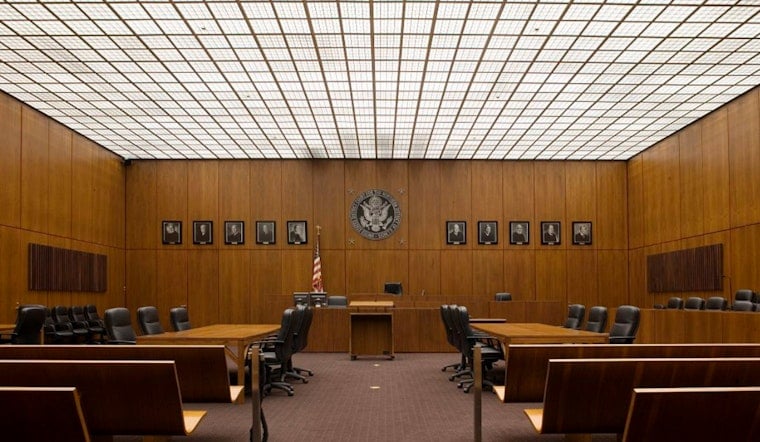
In Chicago’s busiest criminal courthouse, judges are locking up people before trial far more often than advocates thought they would under Illinois’ new no-cash-bail system, and a lot of those defendants are officially rated as low risk by the county’s own tool.
A new report from the Illinois Network for Pretrial Justice says volunteers who watched a month of detention hearings at the Leighton Criminal Courthouse saw prosecutors routinely file for detention, and judges mostly going along with those requests. According to the group, judges ordered jail in roughly 74% of the cases where prosecutors asked for detention during the observed hearings, with gun possession the most common charge appearing on those dockets.
The same report notes that among people the county’s Public Safety Assessment rated lowest, 58.7% were jailed and another 21.7% were placed on electronic monitoring rather than being released without conditions.
The trends volunteers recorded line up with what the court’s own data has been showing. The Office of the Chief Judge runs a rolling Pretrial Fairness Act dashboard, and its weekly numbers indicate that since the law took effect, judges have granted detention petitions in just over 60% of eligible cases. The report cross-referenced that administrative data to frame its broader countywide conclusions.
What observers recorded at Leighton
Volunteers said the racial disparities in the courtroom were hard to miss. The report finds that about 96% of the people prosecutors sought to detain in the sampled hearings appeared to be Black or Latine.
Observers also logged what was and was not at the center of the allegations. More than two-thirds of the detention petitions were tied to accusations of gun possession, not gun use, and judges still granted detention in most of those cases, according to the report.
The authors argue that in many hearings, judges and other courtroom actors leaned more on sweeping prosecutorial narratives about dangerousness than on individualized evidence about the person in front of them. They also point out that a significant number of people who were detained later saw their charges dismissed or their cases end without conviction, which undercuts the idea that jailing them before trial was necessary for public safety.
To build the report, the group trained volunteer court-watchers and limited their observations to one month of detention dockets at the Leighton Criminal Courthouse. They acknowledge that this narrow snapshot puts limits on how far the findings can be safely extended beyond Chicago or beyond that timeframe.
Court and prosecutor responses
According to the Chicago Tribune, the chief judge’s office told reporters that detention is still appropriate when a judge decides that releasing a defendant would endanger the community. The Tribune also reports that the Cook County State’s Attorney’s Office pointed to its public data dashboards and said it is adding tools that will let people export underlying data for independent review.
Legal context
Illinois’ Pretrial Fairness Act eliminated money bond and set strict limits on when judges can detain someone before trial. The idea was to push decisions toward individualized assessments of risk and public safety and away from a system where freedom mostly depended on whether a person could afford to pay.
Advocates at PretrialFairness.org lay out how the law reshaped release and detention standards across Illinois and explain the reform’s stated goals.
The Illinois Network for Pretrial Justice report ends with a list of recommendations for the chief judge and the state’s attorney that aim to increase oversight, curb broad use of detention, and improve data transparency. The next few weeks will reveal whether Cook County’s courts and prosecutors adjust how they use risk scores and detention petitions in response to the scrutiny.





