

























































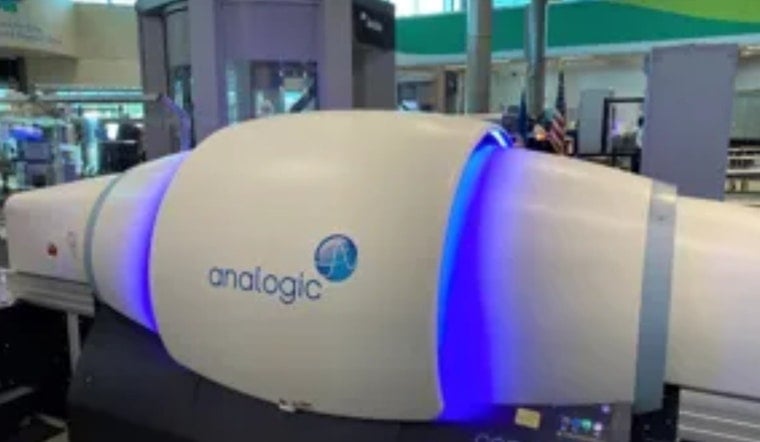
TSA’s rollout of advanced 3D CT checkpoint scanners is colliding with the reality of modern carry‑on luggage, and some Cincinnati travelers are finding out the hard way. The opening on certain new machines is smaller than many passengers expect, so standard rolling suitcases that used to glide through security can now get stuck. That can leave flyers making last‑minute calls at crowded checkpoints, choosing between paying to check a bag or risking delays at the gate just as the summer travel crush hits.
As reported by the Cincinnati Enquirer, some checkpoint CT units have entry tunnels that measure roughly 24.5 inches wide by 16.5 inches high. If a bag does not make it through that opening, TSA officers may direct passengers back to the airline counter to check the luggage.
How the scanners are different
The newer computed tomography machines create a 3D image of carry‑on contents and use automated threat detection to cut down on manual bag checks. They also let many travelers keep laptops and liquids inside their bags. The tradeoff is that several checkpoint CT models have a narrower tunnel profile than the older 2D x‑ray units, which is what can cause a perfectly legal carry‑on to fail at the machine’s opening.
Industry coverage notes that the smaller tunnel geometry is part of a design compromise to fit CT units into busy checkpoint lanes while preserving throughput and detection performance, according to Airport Technology.
Carry‑on sizes vs. “fits‑through”
Airlines typically advertise a standard carry‑on size of about 22 by 14 by 9 inches, a figure that includes wheels and handles and sets customer expectations for what will go in the overhead bin. Per American Airlines, that 22×14×9 guideline is the usual benchmark. The catch is that a bag sized to those numbers can still bulge, protrude, or otherwise fail to slide into a CT scanner’s throat.
The result is a frustrating gap between policy and hardware. Travelers who bought a bag that “meets airline limits” may still be turned away at the checkpoint if the particular CT model in use cannot accept that shape or thickness.
What happens if your bag doesn't fit
If a carry‑on will not clear the scanner, TSA officers can require manual screening or ask the passenger to check the bag at the airline counter or at the gate. That extra step can add time and, depending on the carrier’s policy, fees. For guidance on what items are allowed and for checkpoint procedures, travelers should consult the TSA before heading to the airport.
What to do at the airport
To avoid drama in the security line, measure packed bags before you leave home and, when possible, bring a soft‑sided day bag that can compress to fit a narrow opening. If your luggage is new, try the sizer at your airline’s check‑in desk instead of waiting until you are stuck in the TSA queue.
It also helps to arrive early so staff have time to sort out any problems without putting your boarding time at risk, and to check your airline’s gate‑check and overweight or oversize fees so you are not blindsided at the counter.
As CT scanners spread through U.S. checkpoints, the safe play for most flyers is to assume that “fits the overhead bin” is not the same as “fits the scanner throat” and to plan accordingly. A little measuring now can keep a trip from turning into a gate‑side scramble later.




