

























































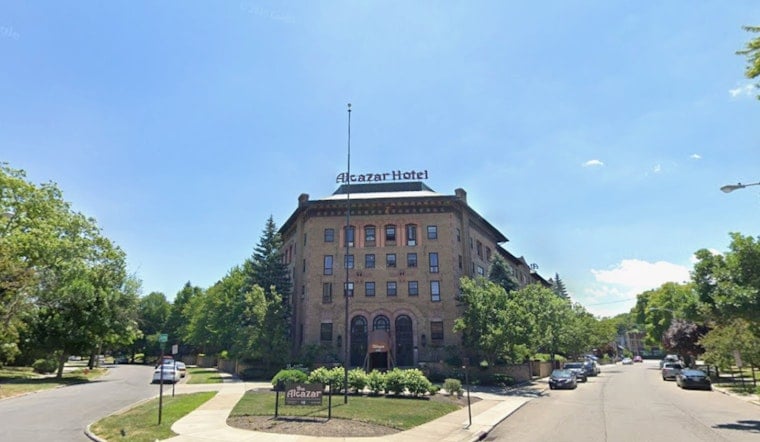
Cleveland Heights is trying to thread a financial needle on one of its most recognizable buildings. City Council is weighing a package of incentives to renovate the Alcazar, the landmark apartment hotel on Derbyshire Road, in a way that steers much of the school tax revenue back to the Cleveland Heights-University Heights district after a front-loaded tax break. Supporters say the deal would save a beloved structure and deliver updated housing. Tenants and housing advocates counter that, without firm protections, the same deal could send rents climbing.
Under draft legislation introduced by the council, the project would receive a 30-year tax-increment financing agreement that delivers roughly a decade of 100 percent abatement, with the later years structured so the school district recovers most of the property taxes it would otherwise receive. The plan also includes a three-year rent-moderation protection and a proposed cap on annual increases for some long-time tenants, who report currently pay as little as $500 to $800 a month. As reported by Cleveland.com.
City records list RP Derbyshire LLC as the developer working through the paperwork for tax exemptions and related agreements. The council packet includes an ordinance authorizing a transfer-and-indemnity arrangement that spells out the mechanics of the deal and environmental indemnities for the property at 2450 Derbyshire Road. Those documents form part of the formal record the city used to process the request, and the ordinance materials show the transfer steps were authorized in late 2025, according to the City of Cleveland Heights.
Public reporting and state filings show the project also secured historic-preservation backing. The Alcazar was awarded roughly $2 million in Ohio historic tax credits to help offset the cost of rehabilitation, and developers have described the renovation as a mid-teens million-dollar effort focused on restoring public spaces and modernizing building systems. Those credits are frequently the difference between a grand restoration and a grand idea that never gets off the ground. As reported by News 5 Cleveland.
Planning filings lay out the scope of the work. The landmark would be reconfigured into roughly 132 updated apartments, with the city’s planning case file and Board of Zoning Appeals records documenting the unit count, the requested variances, and conditions linked to exterior changes and construction timing. The developer has proposed phasing construction to limit tenant displacement while crews upgrade systems and common areas. See the case file in Cleveland Heights planning.
The Alcazar’s public listing already gives a glimpse of the neighborhood’s price reality. The property page lists studios at about $925 a month, one-bedrooms at about $1,400, and two-bedrooms at about $2,800. That spread helps explain why long-term residents are nervous about what a polished, fully rehabbed building could do to their current rent levels. These posted figures appear on the building’s listing as of this week. See current rates on Alcazar Apartments.
What the law requires
Ohio law sets limits on how long tax exemptions can run and gives school boards a say when a city wants to go beyond a standard 10-year window. Any extension can move forward only if statutory notice and compensation rules are met. The statute that governs extension of exemption periods, and the compensation framework for school districts when exemptions stretch past the usual term, is laid out in ORC 5709.51 and related sections. For the legal text and the step-by-step requirements, see Ohio Revised Code 5709.51.
Council members have said they will delay a final vote until the city finishes the required notifications and the district has time to vet the compensation calculations, a scheduling move that pushed consideration into August. The pause is meant to give the school board and the public a chance to dig into the fiscal estimates and the tenant protections on the table before anyone locks in a 30-year commitment, as per Cleveland.com.
Supporters frame the incentives package as a necessary balancing act. Preservation advocates and the developers argue that the subsidies make a complicated, expensive rehab financially possible. Tenant advocates and some council members respond that the city should tighten long-term rent protections and double-check the fiscal math. One way or another, the Alcazar proposal is shaping up as a test case for how the Heights tries to juggle landmark preservation, housing stability, and school funding all at once.




