

























































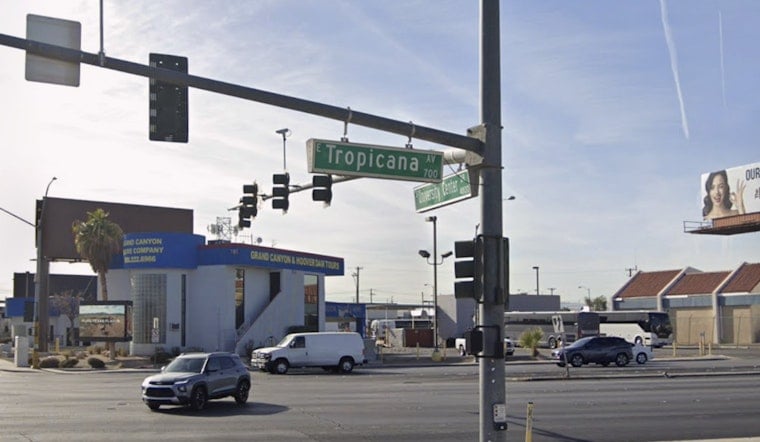
Clark County is lining up behind a slimmer, cheaper overhaul of the long-debated Tropicana Avenue and University Center Drive interchange by UNLV, leaning toward a shorter northbound overpass instead of the earlier below-grade diverging-diamond layout. County staff say the new approach would tighten the project footprint and cut construction time while UNLV keeps hammering out land dedications and access protections.
According to the Las Vegas Review-Journal, county staff recently rolled out a tweaked northbound University Center Drive overpass that is roughly 400 feet shorter than the elevated 2018 concept and carries an estimated cost of about $97 million. Clark County Commissioner Jim Gibson told the paper, "this hasn’t been a labor of love, this has been very difficult," a nod to the political and neighborhood friction surrounding the redesign.
A May 2026 briefing paper to the Board of Regents pegs updated costs for the earlier below-grade diverging-diamond interchange at around $210 million, a jump that pushed the county to revisit its options. The Nevada System of Higher Education document also notes that UNLV has offered to dedicate acreage and easements for the work while the university, county and airport agencies continue negotiating visibility, access and long-term community impacts. Board of Regents briefing paper
Design Tradeoffs And Engineering Headaches
County meeting records show that staff trimmed back the diverging-diamond concept in 2023, cutting four of eight planned bridges and reducing an earlier estimate to roughly $115 million, before warning that market conditions and utility relocation costs later pushed the number back up. County meeting minutes describe the below-grade version as a technically demanding build that would drop portions of Tropicana by up to about 30 feet and shift roughly 3,800 feet of roadway, with secant-pile walls and dewatering required while crews are in the ground. The project’s state environmental permit lays out many of those constraints.
What Drivers And Transit Riders Should Expect
Planners say the two concepts come with very different timelines and neighborhood impacts. The reworked overpass is being sold as roughly a two-year build, while the deeper diverging-diamond setup would take about three years and would need more airport right-of-way. The Las Vegas Review-Journal reported that the diverging-diamond design would require about 15 acres of Department of Aviation right-of-way and could have moved or removed several Regional Transportation Commission bus stops, complicating transit operations and airport access around UNLV and the nearby resort corridor.
Next Steps And Approvals
County staff say early drainage work has already been bid and environmental reviews are moving ahead, and meeting records show that coordination with the FAA over runway-protection-zone encroachment wrapped up in January 2022. The Board of Regents received a formal update in May 2026 as UNLV and Clark County worked through dedications, easements and maintenance agreements, and county leaders say they will chase final design approvals and right-of-way clearances before locking in a start date for major construction. County meeting minutes outline much of the approvals process.
For people who live, study or work around UNLV, the scaled-back overpass is being pitched as a faster route to easing the daily logjam on Tropicana, even if it still comes with months of detours, lane closures and right-of-way wrangling. County commissioners are expected to keep the public in the loop as the final design, funding package and property deals fall into place.




