

























































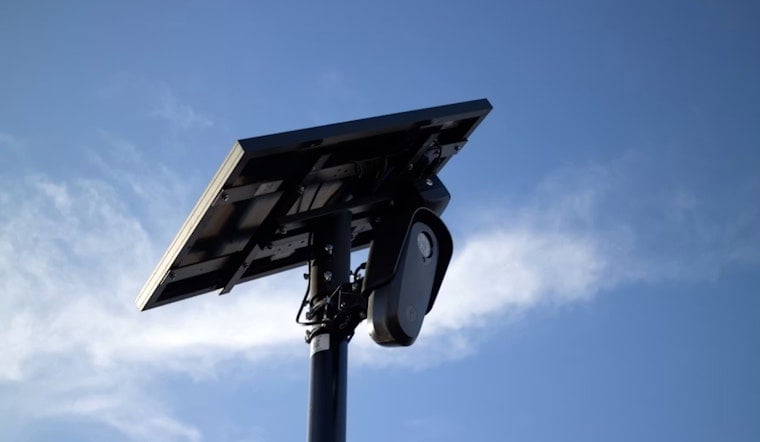
Driving across Dallas-Fort Worth, your car may now be photographed by a fast-growing web of AI-powered license-plate cameras that local police and private groups lean on to trace vehicles tied to crimes. Crowd-sourced maps and local reporting show hundreds of these units already sprinkled around the metro, and officers say a single plate read can quickly turn into a searchable lead in an investigation.
What the cameras record
Flock cameras are built to capture vehicles, not people. They photograph license plates and generate an image of the car’s make, model, and color, along with visible add-ons like bike racks, trailers, or bumper stickers. The system then builds a searchable vehicle "fingerprint" that can link the same car to multiple camera hits and help investigators trace movements over time.
The company’s license-plate reader policy lists the data fields it collects and says that, by default, camera data is hard-deleted on a rolling 30-day basis. Local agencies can change that retention window if law or department policy allows, according to Flock Safety.
How police use the system
Across the Dallas-Fort Worth area, law enforcement agencies use automated license-plate readers to search for stolen vehicles, flag cars connected to active warrants, and generate leads in serious criminal cases. Departments and investigators frame the platform as an investigative aid rather than a tool for routine ticketing, saying real-time alerts can speed up follow-up work when they are chasing a suspect vehicle. Multiple North Texas agencies now rely on these alerts during investigations, as reported by the Fort Worth Star-Telegram.
Retention, audits and privacy controls
Flock and its customers say access to the system is controlled at the local level and that every query is logged so supervisors can audit who searched what and when. The company also stresses that its ALPR systems are designed to focus on vehicles and do not use facial-recognition technology to identify people.
Those limits are highlighted in the company’s public trust materials, which Flock says are meant to curb misuse and make searches audit-ready, according to Flock Safety.
Where the cameras are in DFW
Crowd-sourced mapping projects have already documented tight clusters of cameras across the region, and the numbers are not small. At least 648 cameras have been mapped in Tarrant County alone, according to the Fort Worth Star-Telegram. Separate records obtained by reporters show Dallas police have access to more than 600 license-plate cameras and recently approved a multiyear contract to keep expanding the system, as reported by Governing.
That level of coverage helps detectives connect vehicles across city and county lines. It is also the kind of dense, shared network that privacy advocates say should come with clearer rules and more public oversight.
Privacy concerns and oversight
The spread of these cameras has attracted scrutiny. Investigative reporting found that federal agencies at one point had broader pilot access to Flock’s nationwide network, a program the company later said it paused. Civil-liberties groups point to that kind of episode, along with local examples of non-criminal searches, as reasons to tighten local controls and increase transparency.
Reporting out of Frisco also notes that the Texas Department of Public Safety has data-sharing agreements that let many agencies query camera data statewide, creating a network that includes more than 120 agencies, according to 404 Media.
What drivers can do
If you want to know whether a camera is watching traffic on your block, you can start by checking the crowd-sourced map at DeFlock and requesting your local police department’s written policy on ALPR use and data retention.
Residents can also press agencies for public audits, firm limits on cross-jurisdiction data sharing, and clear rules that restrict non-criminal searches. For more technical details on what these devices collect and how long the information sticks around by default, the Star-Telegram’s Q&A coverage and Flock’s public policies are useful reference points.





