

























































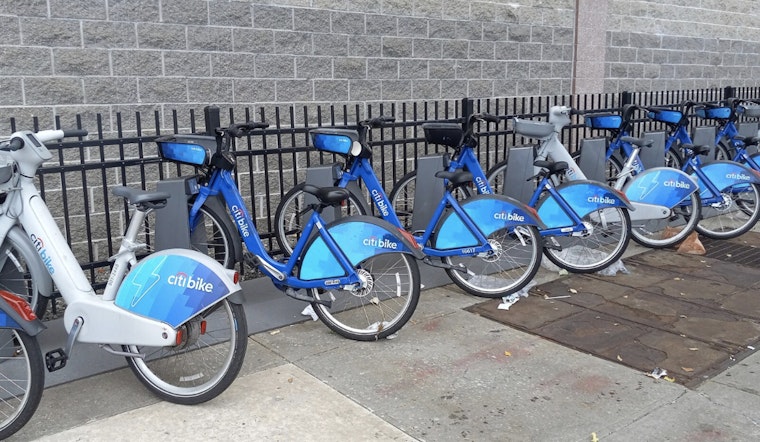
Lower Manhattan commuters got a rude awakening on Wednesday morning when Citi Bike docks across Tribeca and SoHo suddenly turned into bike traps. What should have been quick e-bike hops turned into slow, expensive slogs as riders circled block after block looking for a place to park, watching per-minute fees tick up and, in some cases, giving up and leaving bikes on the sidewalk. Apps showed open spots that did not actually exist, thanks to out-of-service bikes chain-locked into docks that were listed as available.
Streetsblog New York City reported that by about 10 a.m., most docking points from Canal Street south were effectively maxed out, even when the system insisted there was space. At the Laight and Hudson station, the app showed 18 open docks while dozens of unusable bikes filled every slot. “It’s been like 30 minutes, there’s zero open docks,” commuter Marvin Pichardo told Streetsblog after looping the neighborhood and watching the bill climb. Other riders told the outlet they simply abandoned bikes when they could not dock rather than keep paying to ride in circles.
Lyft Says Storm Scrambled System, Riders Still Waiting On Refund Answers
In a statement to Streetsblog New York City, Citi Bike communications director CJ Macklin pointed to Tuesday night’s storm, arguing that bad weather left some docks more jammed than usual and saying the operator “relocated hundreds of bikes overnight.” According to Streetsblog, Lyft would not say whether it plans to refund riders caught in Wednesday’s mess. Mobility experts quoted by the outlet noted that the operator has real-time data that could flag and fix these imbalances before they spiral. Riders, for their part, say that data should be used to prevent meltdowns, not just explain them after the fact.
Per-Minute Fees Turned A Dock Hunt Into A Wallet Hit
Those extra minutes are not just annoying, they are pricey. According to ABC7, Citi Bike’s 2026 pricing puts e-bike overage fees at about $0.27 per minute for members and $0.41 per minute for non-members, which means that a drawn-out dock hunt can quickly wipe out the savings of skipping a cab or train. Under the revised schedule, a 45-minute e-bike ride can run roughly $12.15 for a member. Riders who say they were billed while circling for a dock are now pressing the operator for refunds and clearer in-app directions when stations are full. For a broader look at the new costs, Citi Bike prices to rise rounds up the 2026 changes.
Contract Limits, Weak Penalties And An Expensive Status Quo
Untangling the mess is not just a matter of trucks and technicians. A 2023 report from the Office of the New York City Comptroller found that the city’s contract with Lyft includes performance standards and financial penalties, but that enforcement has been uneven. The report documented thousands of instances where stations sat either completely empty or completely full for long periods and estimated that the city left hundreds of thousands of dollars in fines on the table. The Comptroller urged stronger oversight and clearer performance metrics as Citi Bike keeps growing. The current operating agreement runs through 2029, a milestone that advocates say should be used to lock in firmer service guarantees.
Neighboring Cities Test Workarounds While Manhattan Riders Wait
Across the river, some neighbors are already experimenting with pressure valves for bike-share bottlenecks. Hoboken and Jersey City have rolled out an overflow-parking pilot that lets riders park e-bikes next to full docks and end their trips by snapping a photo, a tweak that Hoboken’s website says is designed to ease the crush at popular stations. Mobility consultants have also floated dedicated staging zones for out-of-service bikes so they do not clog regular docks, while advocates argue that clearer app prompts and faster bike rebalancing should come before any future price hikes. For now, Lower Manhattan riders say they simply want what the app promises: a dock they can count on, without a surprise surcharge attached.


