

























































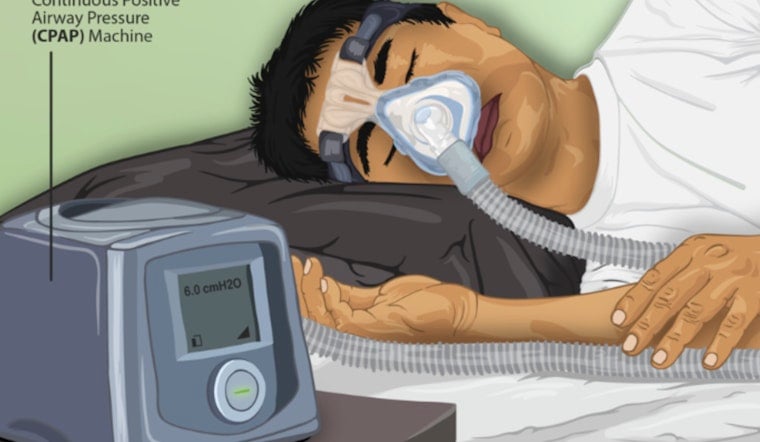
Older adults with untreated sleep apnea saw their thinking skills slide far faster over a decade than peers who stuck with treatment, according to a new analysis. Researchers say the gap was big: about a 69% faster drop in cognitive performance over 10 years, a number that throws fresh spotlight on getting people diagnosed and actually using therapies such as CPAP for the long haul.
The work comes from researchers at the University of Florida College of Medicine and the Johns Hopkins Bloomberg School of Public Health, who linked a decade of Medicare claims with annual cognitive testing, according to News4JAX. Christopher Kaufmann, an assistant professor involved in the study, told the outlet that "using it for longer, sustained periods can help offset cognitive decline." The report notes that collaborators at the University of Maryland and UC San Diego also took part in the analysis.
How researchers measured the effect
Investigators used the National Health and Aging Trends Study (NHATS), linked to Medicare claims, to find older adults diagnosed with obstructive sleep apnea and then follow their performance on yearly cognitive tests for up to 10 years, per the study abstract. They focused on 777 participants from the 2011 NHATS enrollment who had at least one obstructive sleep apnea claim and who were free of cognitive impairment at the start. CPAP treatment was defined using durable medical equipment claims with the HCPCS code E0601.
In adjusted statistical models, the authors report that CPAP-treated participants declined about −0.03 factor-score units per year, compared with about −0.05 units per year for those without evidence of CPAP use. That gap shows up in the study’s CPAP×time interaction term, which is how the team quantified the difference in decline rates. The study abstract lays out the modeling details.
What "69% faster" actually means
The 69% figure describes the relative rate of decline: on the paper’s cognitive scoring scale, participants with no documented CPAP use slid downward substantially faster than those who had evidence of treatment. The investigators and outside experts stress that this is an observational analysis, not a randomized trial, so it cannot prove that CPAP alone prevents cognitive decline. Factors like when obstructive sleep apnea is diagnosed, who receives a device, and how faithfully people use it can all bias results. News4JAX breaks down the headline numbers and the authors’ main takeaways.
How this fits with other dementia research
The new analysis plugs into a growing body of research tying sleep problems and sleep-disordered breathing to cognitive decline and dementia risk. Major reviews and the Alzheimer’s & Dementia 2026 report highlight sleep quality as one of several modifiable contributors to late-life cognitive decline and estimate that a sizable share of dementia burden stems from conditions that are preventable or treatable. Alzheimer’s & Dementia lists sleep among the actionable targets that public health experts are watching closely.
Practical takeaways for patients
Clinicians still view CPAP as the standard treatment for obstructive sleep apnea, but in the real world, access and adherence are all over the map, and insurance rules can shape how long people stay on therapy. Medicare and many other insurers use an initial compliance window, often defined as around four hours of use per night on most nights, to determine whether CPAP coverage continues. That makes early follow-up and support to help patients tolerate the mask and machine crucial for both health outcomes and insurance coverage.
Expanding screening, speeding up diagnosis and building programs that help patients stick with therapy are the kinds of steps the authors and clinicians highlight as logical next moves. See Medicare guidance for the coverage rules and device suppliers’ materials for reimbursement details. CMS and device reimbursement resources spell out those thresholds.
The study’s authors say their findings reinforce the idea that treating sleep apnea may be a modifiable pathway to protecting brain health, while emphasizing that more research is needed to monitor long-term device use and tease out confounding factors. People with heavy snoring, witnessed pauses in breathing, choking or gasping at night, or persistent daytime sleepiness are urged to talk with their clinicians about screening and potential treatment; earlier diagnosis and sustained therapy, when appropriate, are the concrete next steps suggested by both the researchers and local doctors.




