

























































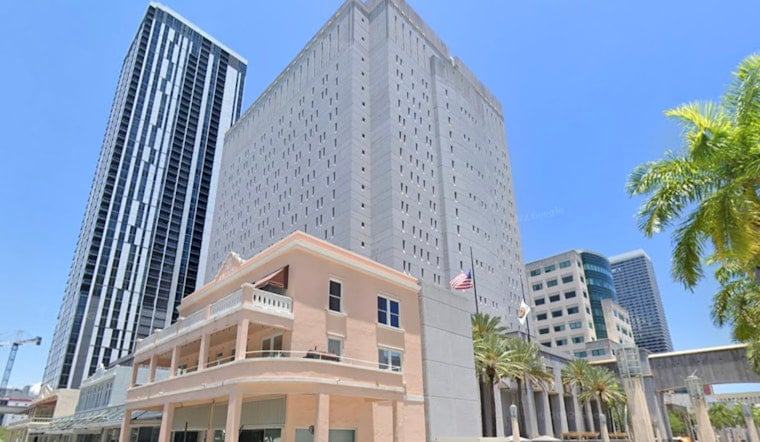
Relatives of people locked up at the Federal Detention Center in downtown Miami say life inside the high-rise jail has gone from bad to worse after detainees were transferred out of a tent camp in the Everglades. Family members and one detainee reached by phone describe suffocating heat, pests and on-and-off water issues, and say some people have been sleeping in their underwear just to get through the night. Their complaints are fueling renewed demands for inspections and clearer answers from federal officials.
According to Local 10, dozens of people who were moved from the Everglades camp known as “Alligator Alcatraz” reported losing air conditioning at the downtown lockup in the middle of the summer heat and said they were left drinking from small metal sinks in their cells. One woman told the station her husband stripped down to his underwear to sleep because the cell was so hot, while others said they saw cockroaches inside housing units. Bureau of Prisons data obtained by the station show just over 1,300 people are currently held at the facility.
Old Equipment, New Complaints
Reporting by CBS Miami found the downtown FDC has been leaning on a portable chiller parked behind the building for years while the agency wrestles with failing chiller systems inside. A 2020 infrastructure report flagged problems with the chillers, and the Bureau of Prisons told the station it secured a contract in February to replace them. Construction, however, had not yet progressed to the point of swapping out the temporary unit. Neighbors, who did not sign up to live next to an industrial air conditioner, have complained that the portable system is noisy and disruptive.
Moves From the Everglades
Advocates say pressure on the downtown jail surged after state and federal officials stopped using the tented detention camp in the Everglades. Earthjustice and the Los Angeles Times reported that the “Alligator Alcatraz” facility halted detention operations in late June and that the people held there were moved to other sites. Families say that transition left their loved ones scattered across the system and, in some cases, harder to keep track of. Environmental groups, meanwhile, have kept up litigation over the Everglades site even as detainees were shifted into permanent facilities like the Miami lockup.
Advocates Press for Oversight
The Center for Biological Diversity has sued state officials, alleging diesel generators at the Everglades camp violated the Clean Air Act. Separately, a Human Rights Watch report released this month details rising deaths and crowded, unsanitary conditions across U.S. immigration detention facilities. Advocates say those findings back up what Miami families are shouting from outside the jail walls: that basic safety inside detention is not guaranteed. Local groups argue that federal inspection reports and firm timelines for repairs at the downtown FDC are long overdue.
What Officials Say
In a statement to Local 10, the Bureau of Prisons acknowledged a problem with one of the detention center’s chillers, said facilities staff began repairs immediately and said the air conditioning malfunction has now been fixed. The agency also told the station that a recent water-pressure issue led officials to hand out bottled water while crews addressed the problem. The Bureau declined to weigh in on specific anecdotal accusations but noted that the facility maintains a pest-control contract. It did not provide any timetable for permanently replacing the chiller system.
For families on the outside, that response falls short. “They’re human and they’re not being treated as human,” one relative told Local 10. Others say they plan to keep pushing for inspections, in-person visits and clearer public reports about repairs. Advocates warn that if the complaints keep coming, congressional or inspector-general oversight is likely to follow, and they are pressing officials to publish a detailed repair schedule so families know when, or if, conditions will improve.



