

























































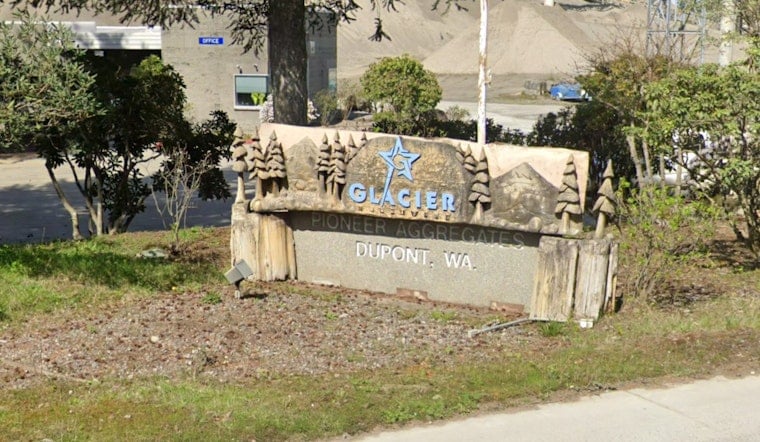
A DuPont hearing examiner has signed off on key permits that could let the Pioneer Aggregates mine chew into previously untouched woods and wetlands, but the bulldozers are not rolling yet. Mining cannot start until a Sequalitchew Creek restoration plan and other required permits are approved. Neighbors and conservationists warn the expansion would drain the springs that feed Sequalitchew Creek and damage a popular trail and marshland used by residents and wildlife.
What the hearing examiner approved - and what he conditioned
On June 11 the city’s hearing examiner granted a Type III site plan review, tree-reduction and critical-areas permits for Glacier Northwest, doing business as CalPortland, to expand the Pioneer Aggregates operation at 4301 Pioneer Ave., according to the city’s Notice of Decision. The ruling comes with strict strings attached: mining cannot begin until permits for a Sequalitchew Creek restoration plan and other required state and local approvals are issued, per the City of DuPont Notice of Decision. The approval would allow roughly 188 acres of horizontal expansion and about 125 acres of deeper re-mining over an estimated 14-year life of the South Parcel project.
Dewatering risks to Sequalitchew Creek
The hearing examiner called dewatering the Vashon Aquifer the proposal’s most significant impact, and the Final Environmental Impact Statement projects major drops in groundwater discharge to the Sequalitchew ravine, with as much as an 83% reduction at peak dewatering and on average about 79% less baseflow after mining concludes, the reporting shows. The decision also notes the Nisqually Tribe had challenged the adequacy of the FEIS, but parties reached a settlement that led to a stipulated dismissal of the tribe’s appeal on May 26, as detailed by The News Tribune.
Neighbors and conservation groups mount an appeal
On June 26 the Clover Creek Restoration Alliance filed an appeal of the hearing examiner’s ruling, arguing the city approved permits before the applicant proved compliance with critical-area standards and shifted meaningful review into a post-approval process, The News Tribune reports. Clover Creek’s president, Sean Arent, warned the decision could mean irreversible harm to wetlands and streams and said, “this might be our last shot to stop the project.” The local advocacy group has been organizing opposition, and the Alliance’s site outlines its long-running campaign to protect Sequalitchew and nearby watersheds (Clover Creek Restoration Alliance).
What the company must do and what it promises
CalPortland’s application describes installing wells to intercept and pump groundwater so gravels can be mined dry, followed by reclamation work; the hearing examiner’s conditions reference a reclamation program that would include planting thousands of trees and other mitigation, the city’s decision says. The Notice of Decision says the project proposes removing landmark trees during mine operations and planting a total of 4,450 new trees as part of reclamation, and that the company would donate the property to the city after mining ends to allow public reuse. The ruling also says materials would continue to be transported primarily by barge, so the expansion would not increase truck trips from the existing operation, per the City of DuPont.
What comes next
The decision is final at the city level but may be subject to judicial review in Pierce County Superior Court under Chapter 36.70C of the Revised Code of Washington, and Clover Creek has signaled it will press its appeal. While permits for the Sequalitchew restoration plan and other state reviews are resolved, the hearing examiner’s conditions mean active mining at the South Parcel should not begin, leaving the project timetable to be set by permit reviews and any court rulings.



