

























































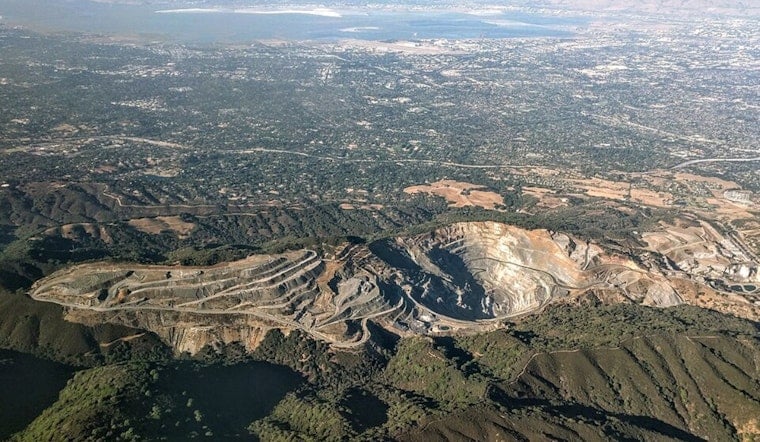
After years of sitting silent on the ridge above Cupertino, the hulking Permanente cement plant is finally coming down. Demolition crews have begun tearing into the long-idle kiln and surrounding industrial buildings on roughly 123 acres of the larger quarry complex. Neighbors and county officials say the highly visible work marks the first major milestone in a multi-decade effort to clean up contaminated soils and restore habitat along Permanente Creek.
Heidelberg Materials North America has secured the required permits and hired a contractor to remove about 40 structures on that 123-acre slice as part of a phased demolition plan, according to the San José Spotlight. The area currently being dismantled is only a fraction of the sprawling Permanente property, which stretches across thousands of acres in the Cupertino and Palo Alto foothills.
What’s Being Torn Down
The current work zeroes in on aging process buildings, storage yards and administrative facilities clustered around the old kiln. Demolition is being phased to limit dust and runoff as structures come down. Santa Clara County planning documents identify the specific project area and outline the permitting pathway for both demolition and longer-term reclamation work. Local coverage also notes that demolition is being staged so site-stabilizing and erosion controls can be installed as materials are removed, in order to protect Permanente Creek and downstream neighborhoods. Coverage in SFGATE describes the phased approach and the precautions being built into the schedule.
Why the Site Drew Lawsuits
The Permanente plant and quarry come with a long enforcement history tied to discharges of selenium and other metals into Permanente Creek. In 2015, the federal government and the State of California reached a major enforcement settlement with the operator that required the construction of wastewater treatment measures and imposed civil penalties, according to the Department of Justice. Local reporting and legal filings detail years of county notices and citations that helped push regulators and advocates to demand permanent cleanup and reclamation of the site.
San José Spotlight and court records show the Sierra Club filed a citizen suit in 2011, which ultimately led to a consent decree in 2013 requiring repairs and protections for Permanente Creek. Those actions helped set the stage for the demolition and restoration efforts now getting underway.
Restoration Will Take Decades
For anyone hoping the plant’s teardown means the land will be green and pristine in a few years, the fine print tells a different story. County and state environmental filings make clear that demolition is only an early chapter in an extended reclamation plan that could stretch for decades.
The CEQA docket for the Permanente Quarry Reclamation Plan Amendment lays out a multi-step program of backfilling, grading and revegetation, and notes that the broader reclamation effort is expected to move forward on a long timetable. As summarized in the state CEQAnet record, the plan envisions extensive grading, imported fill and revegetation over roughly a 40-year horizon to move the mined lands back toward open-space conditions. CEQAnet hosts the public filings and project summary.
Legal Implications
The site’s legal baggage does not vanish with the buildings. The company will carry ongoing monitoring and remediation obligations even after demolition is complete. Regulatory agencies have relied on permits, violation notices and consent orders to require pollution controls and mandate restoration work, and the Permanente site remains on the enforcement radar.
The San Francisco Bay Regional Water Board continues to list the quarry and plant as an enforcement priority, and its materials, along with court records, track both past settlements and current compliance steps.
What Neighbors Should Expect
For nearby residents, the day-to-day reality will be a slow but visible transformation. County officials and the company say demolition will be staged to reduce truck traffic, control dust and protect waterways, all while additional permitting and environmental review move forward in the background.
The City of Cupertino has posted a local update that walks residents through the site transition and the ongoing coordination with county staff and state and regional regulators. The City of Cupertino and county planning materials highlight public outreach commitments, monitoring requirements and follow-up environmental reviews that will track the reclamation process over time.
Community advocates and local leaders are calling the start of demolition a long-awaited step, even as they caution that the dramatic visuals of structures coming down are only the beginning of a very long restoration story. In a company release tied to the restoration program, Supervisor Margaret Abe-Koga put it simply: “This day was a long time in coming,” capturing the years of advocacy that preceded the work, according to Heidelberg Materials North America.





