

























































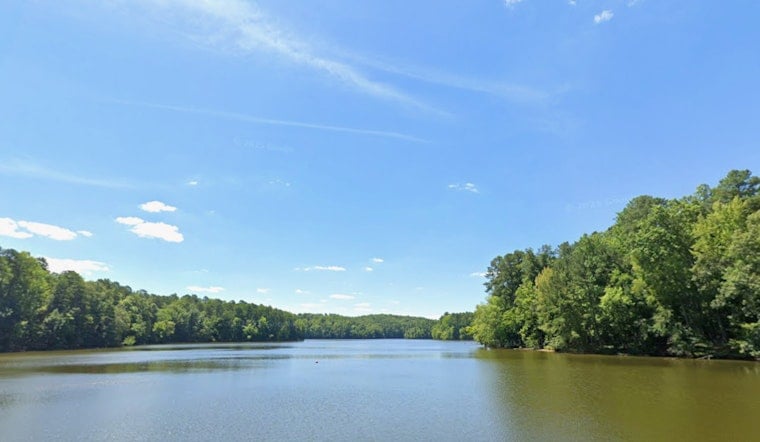
The Eno River is running low and Orange County's main reservoirs are dropping, putting farmers and water managers on edge as a stubborn dry spell hangs on. Heat and a lack of steady rain have left wide bands of bare shoreline at University Lake, and utility crews are watching inflows more closely. From Chapel Hill to Carrboro, residents and businesses are being asked to voluntarily dial back water use while officials keep a close eye on supplies.
A new federal drought map shows much of Orange County in "exceptional drought," the most severe category on the U.S. Drought Monitor scale. That level signals widespread shortages and higher fire risk, according to the U.S. Drought Monitor. The same designation now covers Durham and other nearby Triangle counties, shrinking the window for a quick recovery even if a few pop-up storms roll through.
Where Chapel Hill and Carrboro Get Their Water
Most public water for Chapel Hill, Carrboro and the UNC campus is drawn from University Lake, the Cane Creek Reservoir and the Quarry Reservoir. The North Carolina Department of Environmental Quality notes that OWASA supplies drinking water to roughly 70,000 people across those communities, illustrating how a relatively small regional system keeps two towns and a major university running, according to NC DEQ.
OWASA Says Reservoirs Still Above The Trigger
OWASA told local media that its three-reservoir system is sitting at about 73% of capacity, roughly 3 percentage points above the level that would launch its Water Shortage Response Plan, as reported by ABC11. "We're not in drought restrictions yet," OWASA's Mary Tiger said, adding that the utility is tracking inflows closely and pushing for voluntary conservation in the meantime.
Farms And Well Owners Are Already Feeling The Squeeze
At Eno River Farm, assistant general manager Tree Barber told the station that the dry stretch cut the strawberry season short, shrank the blackberry harvest and forced the farm to scrap plans for fields of sunflowers and zinnias, according to ABC11. Beyond the public system, roughly 40% of Orange County residents rely primarily on private wells, a figure from a U.S. Geological Survey county study that underscores how groundwater dependence can leave some households more vulnerable when streams run low, per USGS.
What Would Force Mandatory Restrictions
Local ordinances and OWASA policy spell out staged water-shortage responses that kick in based on how much water is stored in the reservoirs and modeled risk projections. If OWASA determines its stored supply is likely to drop to critically low levels, it asks Chapel Hill and Carrboro leaders to declare formal stages that come with mandatory cutbacks. Chapel Hill's own regulations describe that process and list the kinds of rules that can follow, from limits on outdoor watering to extra charges for high use, according to the Chapel Hill town code.
For now, officials are sticking with voluntary conservation and urging basic steps like shorter showers, running full loads of laundry and putting off nonessential outdoor watering. Farmers and well owners, meanwhile, are bracing for a longer haul. Residents are being encouraged to watch for updates from local governments and from the U.S. Drought Monitor, which posts weekly changes in conditions and would reflect any formal water-shortage declarations.




