

























































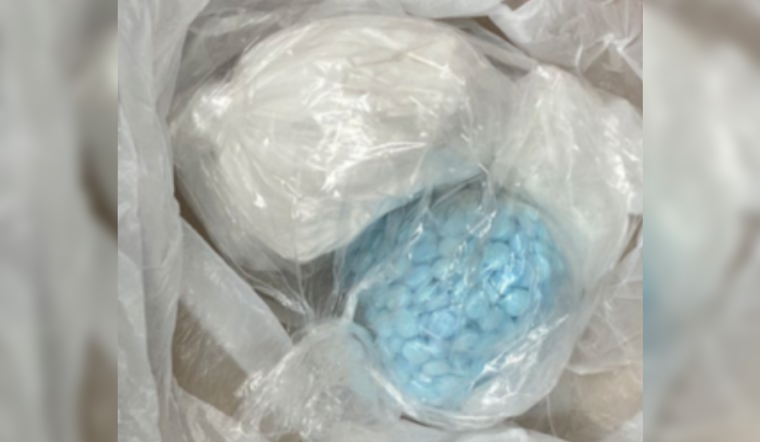
A federal jury in Minneapolis has convicted 37-year-old Michaela Karon McKinney on three counts tied to a fentanyl trafficking conspiracy that, according to investigators, pushed drugs from the Twin Cities into northern Minnesota. The verdict came on July 24, 2026, two years after an undercover sting led to a July 1, 2024 controlled buy at the Walmart in Little Falls. McKinney now faces a mandatory minimum of 10 years in federal prison, with sentencing to be scheduled at a later date.
Prosecutors outline the scheme
In a press release, the U.S. Attorney's Office, District of Minnesota said investigators tied McKinney to distribution runs in 2024 that involved more than 180 grams of powder fentanyl, nearly 500 M-30 fentanyl pills and about 30 grams of methamphetamine. Prosecutors said she provided her vehicle to Minneapolis-based distributor La’Veal O. Allen and drove him to Little Falls for the July 1, 2024 sale that ended with both of them in handcuffs. Federal officials credited a multi-agency effort for uncovering and dismantling the operation.
Evidence recovered and charges
When officers searched McKinney’s vehicle after the controlled buy, they found her six-year-old son in the back seat and a loaded Glock pistol in the center console. Forensic testing showed both McKinney’s and Allen’s DNA on the gun, according to FOX9. Jurors convicted McKinney of conspiracy to distribute fentanyl, aiding and abetting possession with intent to distribute fentanyl, and possessing a firearm in furtherance of a drug trafficking offense. Prosecutors argued at trial that the combination of a child in the car and a loaded weapon raised the stakes significantly.
Court timeline and co-defendants
The two-day federal trial started on July 13, 2026, and the jury returned guilty verdicts later in the month, according to the U.S. Attorney’s Office. McKinney was one of three defendants in the case. Her co-defendants, La’Veal O. Allen and Marquise J. Walker, pleaded guilty to conspiracy to distribute fentanyl in December 2025 and April 2026. All three defendants are in custody awaiting sentencing. Assistant U.S. Attorney Garrett S. Fields and Special Assistant U.S. Attorney Ebenezer K. Gyasi handled the prosecution.
Why prosecutors say this case matters
Federal prosecutors and local task force members cast the conviction as part of a broader push to disrupt pipelines that move fentanyl from urban centers into smaller towns and tribal communities across Greater Minnesota. Public health snapshots and state reporting show fentanyl and other synthetic opioids remain leading drivers of overdose deaths in Minnesota, even as year-to-year numbers have shifted and, in some areas, improved. Officials caution that those gains are fragile. For a deeper look at recent statewide overdose trends, see the Star Tribune.
What’s next
Sentencing dates have not yet been set for McKinney, Allen, or Walker, but McKinney faces at least a 10-year mandatory minimum prison term. Federal officials said the case grew out of work by the Paul Bunyan Drug Task Force, FBI Headwaters Task Force, Bureau of Indian Affairs and the Minnesota Bureau of Criminal Apprehension, among others. Prosecutors said the investigation and resulting seizure kept a substantial quantity of fentanyl and methamphetamine from reaching users in communities across northern Minnesota.



