

























































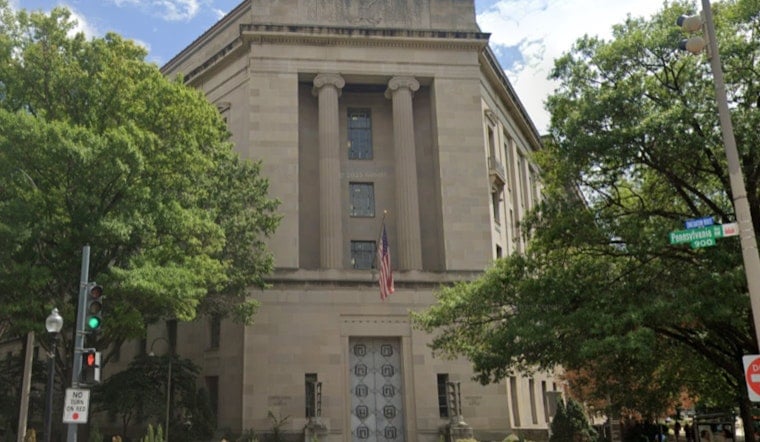
The Justice Department cranked up a nationwide legal fight over gun policy on Wednesday, filing federal lawsuits to stop new firearms restrictions in Virginia and California and signaling it will go after similar state rules in the wake of last week’s Supreme Court decision expanding Second Amendment protections. The cases push the federal government into a direct clash with state lawmakers who passed those measures this spring, and they ask judges to put the brakes on enforcement while courts decide whether the laws survive under the high court’s new test. Officials are casting the move as one of the Justice Department’s most aggressive recent uses of its civil authority.
The department filed separate complaints against the Commonwealth of Virginia and the State of California, according to CBS News. In Virginia, DOJ lawyers are challenging a statute that would bar the commercial sale and transfer of many AR-15 style rifles. In California, they are asking a court to stop a newly enacted retail ban on certain semiautomatic pistols and to block enforcement of the state’s long-running handgun roster. Both suits were filed Wednesday and seek declaratory relief along with injunctions that would prevent the laws from being enforced while the constitutional questions are litigated.
“The Constitution is not a suggestion, and the Second Amendment is not a second-class right,” Acting Attorney General Todd Blanche said in the department’s announcement, a statement released by the U.S. Department of Justice. The agency said its Civil Rights Division’s Second Amendment Section will bring challenges wherever it concludes that state firearms regulations conflict with the Supreme Court’s guidance.
Last Thursday the Supreme Court, in Wolford v. Lopez, struck down Hawaii’s so-called “express-consent” or “vampire” rule, holding that licensed gun carriers cannot be forced to obtain permission from property owners before entering private businesses that are open to the public. As AP News noted, the majority said Hawaii’s requirement clashed with the Court’s post-Bruen framework and pointed to several other states that had adopted similar default restrictions.
Legal roadmap the DOJ is asking courts to follow
In its Virginia complaint the United States openly acknowledges that existing Fourth Circuit precedent cuts the other way, then bluntly argues that the appellate court got it wrong and asks a federal judge to depart from that line of cases, according to the department’s filing. The case, brought in the Richmond division of the Eastern District of Virginia, contends that the state’s ban on commercial sales of certain semiautomatic rifles cannot be squared with the Supreme Court’s current Second Amendment jurisprudence. The DOJ is asking for a declaratory judgment and a permanent injunction against enforcement of the law while the litigation moves forward; the full complaint is posted by the U.S. Department of Justice.
Where this hits home for states and gun businesses
The California suit zeroes in on a measure critics quickly labeled a “Glock ban,” along with the state’s handgun-roster system, a set of rules that dictates which models gun dealers are allowed to sell. CBS News reports that the California law was scheduled to take effect July 1, a timing detail that helps explain the Justice Department’s rush to get a federal judge involved. For firearms retailers and buyers in states that tightened their laws this year, the outcome of these cases will determine whether new restrictions are temporarily frozen or, if courts side with the states, left in place while appeals play out.
What’s likely to happen next
The court battles are expected to move quickly. Some local judges have already issued injunctions that blocked portions of state measures, and similar challenges often head to the appeals courts before anyone asks the Supreme Court to weigh in. The Washington Post recently detailed lower-court rulings that have slowed enforcement of parts of Virginia’s law, underscoring how fragmented the short-term legal landscape has become. At the same time, the high court this fall is set to hear separate cases over AR-15 style bans in other circuits, a move that could reshape how lower courts analyze Second Amendment challenges, according to AP News.
Legal observers say the Justice Department’s new strategy of pairing rapid-fire complaints with fresh Supreme Court guidance is designed both to secure swift injunctions and to push for broader appellate rulings that resolve conflicting lower-court precedents. SCOTUSblog and other analysts expect drawn-out litigation and a likely round of appeals that could send some of these disputes back to the Supreme Court if the circuits split over how to apply the post-Bruen framework. For now, the federal suits all but guarantee months of courtroom sparring and a patchwork of rules, with this year’s state legislation either kept on ice or snapped back into force depending on how judges rule.



