

























































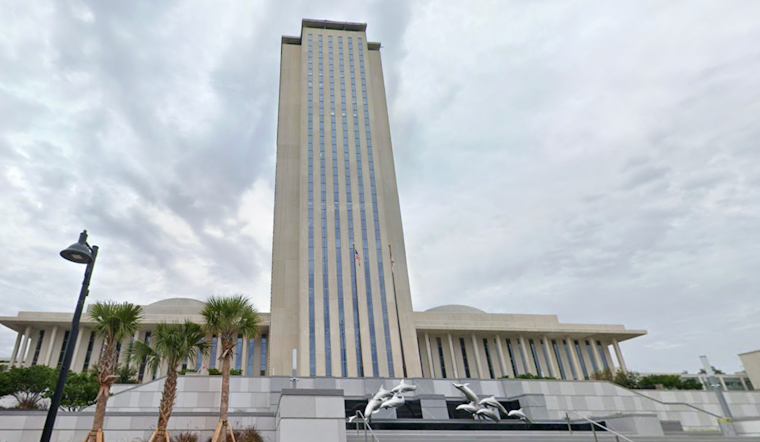
On Thursday, the Florida Supreme Court significantly expanded workers' compensation protection for people attacked on the job, ruling that employees hurt by third-party violence can qualify for benefits if their work or workplace made them more vulnerable. The case centers on a 2019 shooting that left Value Car Rental manager Mohammed Bouayad critically injured while walking between a hotel kiosk and an outside office near Orlando International Airport.
Writing for the majority, Justice Carlos G. Muñiz rejected the First District Court of Appeal's tighter approach to what counts as an occupational injury. He drew a sharp line between harm that "arises out of work performed" and harm strictly "caused by work performed." As reported by Tampa Free Press, the high court quashed the appeals court's decision and sent the case back to the First DCA to apply the broader standard.
According to court filings and appellate records, Bouayad was shot multiple times around midnight on June 28, 2019, while carrying rental agreements and cash from a kiosk to an outside office at a hotel near the airport. The judge of compensation claims initially awarded him benefits after finding that his late shift, the cash he handled and the dimly lit walkway "substantially contributed to the risk of an attack," as detailed by Justia.
Value's carrier, Normandy Insurance, denied the claim, and in 2023 a three-judge panel of the First District Court of Appeal set aside the compensation judge's award and certified the question of whether third-party violence can satisfy the occupational-causation requirement. Local reports at the time highlighted the split decision, and The Florida Channel later posted video of the Supreme Court oral arguments.
What the ruling means
The Supreme Court's opinion restores a broader, no-fault lens to workplace-violence claims. Employees working late shifts, in isolated spots or with cash on hand can argue that their duties materially heightened the danger they faced. Industry coverage and legal commentary note that the ruling could spur more compensable claims from people in those higher-risk roles and push insurers to sharpen their evidentiary strategies on remand, as Bloomberg Law observed.
Workers-rights advocates and claimants' attorneys have praised the decision as consistent with the original idea of quick, no-fault benefits, while defense lawyers warn it may broaden carriers' exposure. A case review by Florida Workers’ Advocates underscored how the ruling shifts the focus to workplace risk itself rather than the assailant's motive.
Legal implications
The court held that injured workers do not have to prove their attacker had a work-related motive, and that a dangerous or isolated workplace can, by itself, satisfy the occupational-causation element. That change will likely push lawyers to zero in on evidence about work hours, physical setting, cash handling and other job-linked exposures when they argue whether an injury is compensable, according to Tampa Free Press.
The case now returns to the First DCA for a fresh look at the facts under the Supreme Court's instruction. How that panel applies the new standard will determine whether this becomes a wide-open path to benefits or a narrower route tied to specific job hazards. In the meantime, employers with late-night or isolated operations may want to revisit security and training practices as both sides gear up for further litigation.





