

























































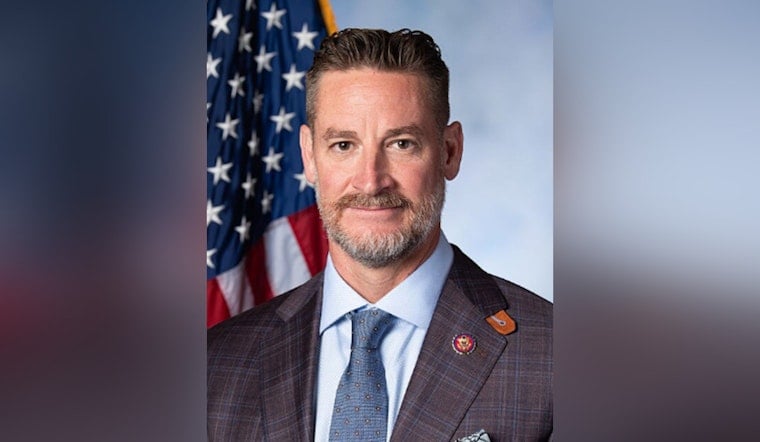
Florida Republican Rep. Greg Steube has jumped straight into one of the most explosive fights in immigration politics, filing federal legislation on July 14 that would sharply narrow who gets automatic U.S. citizenship at birth. His proposal, the Birthright CLAIM Act, targets children born on American soil to noncitizen parents and would rewrite parts of the Immigration and Nationality Act, adding new tests for parentage and residency that supporters say would clamp down on “birth tourism” and other perceived loopholes.
According to Steube.house.gov, the bill, formally named the Birthright Citizenship Limits for Aliens and Illegal Migrants (CLAIM) Act, was introduced on July 14 after public calls from President Trump and recent commentary from the Supreme Court. In a statement, Steube said the measure “restores common-sense limits” on birthright citizenship and protects taxpayers from what he calls abuse of the system.
What the bill would change
As outlined in the legislative text posted on Steube.house.gov, the proposal would block automatic citizenship at birth when both parents are noncitizens and at least one parent is either in the country unlawfully or present only on temporary, nonpermanent status. It would also require mandatory DNA paternity testing in cases where a child born in the United States to an undocumented mother claims U.S. citizenship solely through a father who is a U.S. citizen or lawful permanent resident.
Under the bill, federal agencies could not issue passports, Social Security numbers, or certificates of citizenship until biological parentage is confirmed. Testing would have to be performed by labs accredited by the U.S. Department of Health and Human Services, and the cost would fall on parents or legal guardians, not the government. The measure also raises the residency requirement for U.S. citizens passing citizenship to children born abroad, increasing it from five years to ten, with at least three of those years occurring in the five-year period immediately before the child’s birth.
Cosponsors and process
The filing lists Republican Reps. Stephanie Bice of Oklahoma, Tim Burchett of Tennessee, and Ralph Norman of South Carolina as original co-sponsors. The bill has been formally referred to the relevant House committee for its first round of scrutiny, according to the Tampa Free Press. Supporters argue this statutory push responds directly to calls from elected officials and some Supreme Court justices to clarify federal law rather than rely on executive action.
Legal context
Steube’s move comes on the heels of the Supreme Court’s June 30, 2026 decision in Supreme Court case Trump v. Barbara, which reaffirmed that children born in the United States are citizens at birth. In a separate opinion, Justice Brett Kavanaugh highlighted Congress’s authority to adjust statutory language, a point that underscores the legislative route Steube is taking. That tension between the Constitution’s Citizenship Clause and Congress’s power to shape immigration statutes is almost certain to frame any courtroom battles if the bill ever becomes law.
Why supporters and critics disagree
Steube and his allies frequently cite federal investigations and a Senate Homeland Security and Governmental Affairs Committee inquiry into organized “birth tourism” operations, which described businesses arranging for foreign nationals to give birth in the United States, according to an HSGAC report. They argue that automatic citizenship rules have been stretched in ways Congress never intended and that taxpayers end up footing the bill.
Independent researchers, however, say the phenomenon is real but relatively small. The Migration Policy Institute notes that most available estimates suggest a modest scale and points to Centers for Disease Control and Prevention data indicating roughly 9,600 births in 2024 to mothers who listed foreign addresses on their paperwork. That disconnect between political attention and the size of the problem is one reason this fight is as much about symbolism and principle as raw numbers.
What comes next
For now, the bill sits in committee, where it could be amended, stalled, or sent to the House floor. Even if it clears the House, it would still need approval from the Senate and a presidential signature to become law. Given the Supreme Court’s recent pronouncements on birthright citizenship, most legal observers expect that any enacted change in this area would trigger swift constitutional challenges.
Steube, who represents a Florida district, is casting the bill as a move to shield taxpayers and safeguard the meaning of American citizenship. Advocates on both sides are already gearing up for a prolonged brawl in Congress and the courts. For now, the statutory language, the political arguments, and the latest court guidance are all on the table as the country reopens an old and volatile question: who exactly gets to be an American at birth.





