

























































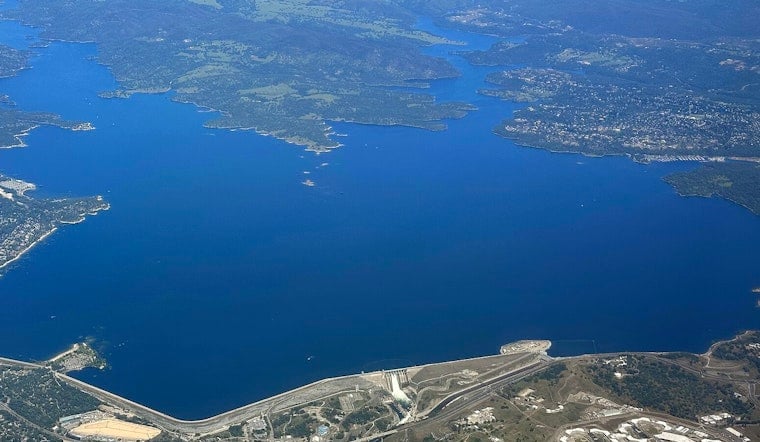
Folsom Lake is on track to limp into the end of the year with noticeably less water than regional managers were hoping for, and the timing could not be worse for both fish and people. Current projections have officials working off a warning number of roughly 266,000 acre-feet by the end of December, about 34,000 acre-feet below the roughly 300,000 acre-feet planning minimum many agencies treat as a safety buffer. That gap could squeeze the American River’s cold-water pool, putting fall Chinook spawning conditions and next summer’s recreation in play as managers juggle deliveries and river temperatures.
Where the forecast comes from
The forecast surfaced publicly through reporting by The Sacramento Bee, which traced the 266,000 acre-foot estimate to a letter sent to the U.S. Bureau of Reclamation by Ashlee Casey, executive director of the Water Forum. In that letter, the comparison point is a roughly 300,000 acre-foot end-of-December level, and local water managers describe the roughly 34,000 acre-foot gap as a meaningful margin if upstream runoff comes in light this winter.
Federal push and extra deliveries
Policy decisions are a big reason the math has shifted. An executive order issued in January 2025 directed federal agencies to maximize water deliveries to high-need communities, a directive laid out in the Federal Register. Since that guidance took effect, the Bureau of Reclamation reports providing more than 180,000 acre-feet of additional water to Central Valley Project contractors. That has meant extra supplies for some users, but it has also reduced the carryover storage that managers rely on for cold-water management later in the year.
What the planning minimum means
The year-end planning minimum is not a guess, it is baked into regional agreements. The Water Forum describes a 300,000 acre-foot end-of-December planning minimum, with a lower 230,000 acre-foot floor reserved for extremely dry years. The idea is to preserve a cold-water pool for fish while still keeping surface supplies available for cities and utilities. That buffer is designed to buy time and preserve options if the following year opens on the dry side.
Cold water is finite and vital for Chinook
In this system, temperature is as critical as volume. Federal biological opinions and Reclamation planning lean on a daily average of roughly 56°F as a benchmark during the management season. If that threshold is exceeded during egg incubation, egg and fry mortality can climb sharply. Reclamation’s environmental analyses summarize the National Marine Fisheries Service biological opinion and point to the 56°F compliance point as a central reason managers try to guard those year-end cold-water reserves.
Where things stand now
Operational outlooks offer a mixed message. Seasonal forecasts from the California-Nevada River Forecast Center issued this week combine observed inflows with model runs and still leave room for a dry-year outcome unless winter storms refill storage. Local history keeps everyone a bit jumpy too. During the 2021 drawdown, the shrinking lake level forced multiple boat launches to close and hurt nearby businesses. More recent reporting notes that when storage drops toward 150,000 acre-feet, intake infrastructure can be put at risk and emergency fixes may be needed, impacts that The Sacramento Bee has highlighted in its coverage.
Operations, tools and next steps
State and federal operators are not without levers, even if the room to maneuver is tight. The California Department of Water Resources notes that summer rules shift operations starting July 1, which allows more water capture and transfers once vulnerable fish are past the south Delta pumping footprint. Regional managers also point to tools such as groundwater banking, contractual guarantees and coordinated reservoir scheduling. The Water Forum and local agencies describe those strategies as ways to smooth deliveries while still protecting American River temperature targets. Yet managers emphasize that the eventual outcome will hinge on how winter storms play out and how Reclamation sets releases through the fall, which will determine whether this projection lands as a full-blown problem or a near-miss.
Legal and policy tensions
The same executive order that encouraged expanded deliveries also called for agency reviews of Endangered Species Act and National Environmental Policy Act processes, a detail spelled out in the Federal Register notice. That move has sharpened policy debates between water users and environmental advocates. On one side are demands for reliable water in living rooms and on farms, and on the other is the need to maintain a river cold-water pool for salmon. Those competing priorities are expected to shape the arguments over fall and winter operations.
For now, managers say the window to change the end-of-December picture is narrow. It will take some combination of helpful winter storms, carefully chosen operational moves and local conservation to close the projected gap. In the meantime, Reclamation and regional water agencies are expected to update forecasts and announce operational decisions as the season unfolds.





