

























































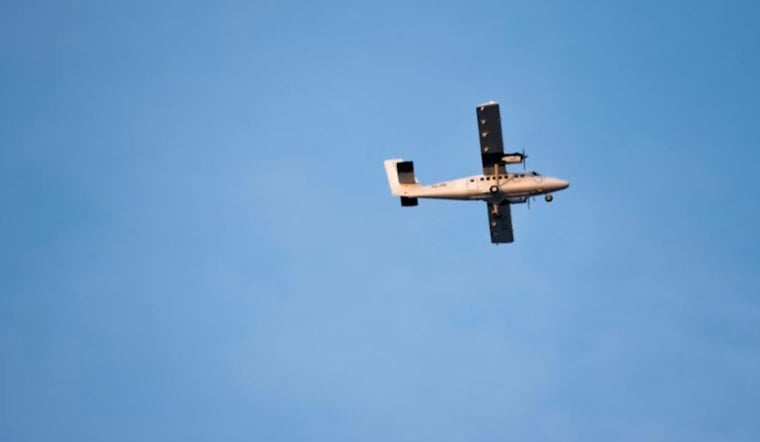
GE Aerospace's hybrid-electric test plane quietly pulled off a big headline move on Monday, climbing above 30,000 feet and dropping into the Farnborough International Airshow after a North Atlantic trek that was anything but a simple ferry hop. The modified Saab 340B ran a megawatt-class hybrid system in flight on the way over, giving engineers rare, sustained data on electrified propulsion outside a lab. Partners including NASA, Beta Technologies and Boeing are wrapped into the effort, which company engineers say is shifting the technology from computer models toward real-world flight readiness.
As reported by Aviation Week, GE's Saab 340B demonstrator, nicknamed "Gertrude," completed a hybrid-electric flight above 30,000 feet, then was ferried from Plattsburgh, New York, via Goose Bay, Nuuk, Keflavik and Wick on its way to the United Kingdom airshow. Aviation Week notes that the hybrid installation sits in the No. 2 starboard engine position, while the left engine remains a standard CT7 turboprop, and that the system ran in both motored and generated modes during sustained cruise segments.
Ground validation was a crucial warm-up act. NASA's EPFD executive summary details high-voltage testing at the agency's Electric Aircraft Testbed in Sandusky, Ohio, where engineers simulated cruise conditions up to about 45,000 feet. That NEAT test campaign helped validate megawatt-class motor/generators, converters and thermal-management systems that engineers say must be proven on the ground before the powertrain can be bolted onto a flying testbed.
How the system is built
GE says the demonstrator pairs a conventional turbine engine with an integrated electric motor/generator, power electronics and controls to create a hybrid propulsion architecture that can either assist or regenerate power depending on the phase of flight. According to GE Aerospace, those components were matured in company and NASA facilities in Ohio before being packaged into a modified nacelle for in-flight validation under the Electrified Powertrain Flight Demonstration program. The work feeds into the broader RISE effort that is targeting next-generation narrowbody engine designs.
Partners, route and test results
GE's hybrid-electric leader Christine Andrews told reporters the team intentionally left the port engine untouched and focused the hybrid system on the starboard side, a configuration that let engineers push the Saab past its rated altitude while operating in hybrid mode for hours at a time. Aviation Week also reports that batteries were supplied by BAE Systems and that pilots from Beta Technologies flew the demonstrator across each leg of the trans-Atlantic trip with the hybrid system running. Those very practical ferry flights, the publication notes, doubled as test cards to validate thermal management and continuous power delivery under real-world conditions.
Why regulators and airlines are watching
The milestone lands at a moment when regulators and airlines are demanding deeper cuts in aviation emissions, a backdrop that, as The Seattle Times reported, is ramping up pressure on engine makers to show cleaner technologies that actually work in the sky. NASA's EPFD materials note that the program is deliberately engaging the FAA and standards bodies to define ways of showing compliance, a necessary step if hybrid systems are to evolve from demonstrators into certified hardware on commercial narrowbodies. That regulatory squeeze is part of why manufacturers are racing to collect not just lab data but sustained, high-altitude operational results.
Company leaders say more flight testing is planned later this year as the team gathers data to shape next-generation narrowbody engines and future certification work. GE Aerospace and its partners describe the Farnborough outing as a technical proof of concept that will influence design decisions for future engines and bolster the regulatory dossiers needed to bring hybrid propulsion into mainstream service.





