

























































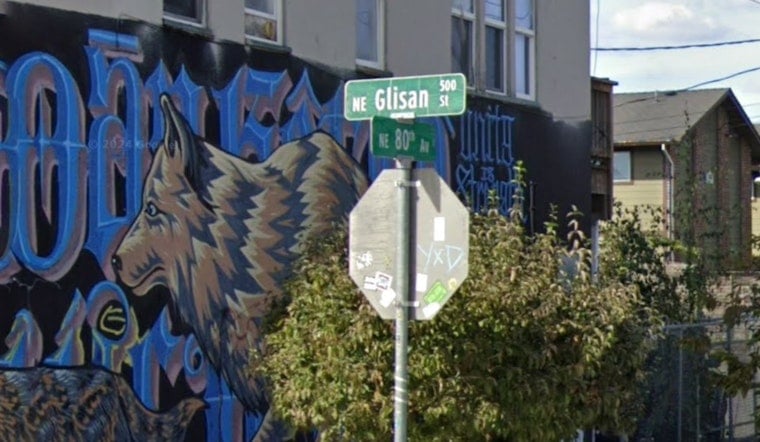
A Portland bartender says a recently installed concrete median on NE Glisan Street left her with catastrophic brain damage and is asking a Multnomah County jury for roughly $28 million from the city and the contractor that built it. Her lawsuit argues that the Portland Bureau of Transportation’s much touted “safety improvement” turned a neighborhood crossing into a serious hazard for people walking and biking instead of protecting them.
What the complaint says
According to The Oregonian/OregonLive, the plaintiff, identified in court papers as Rosie Lopez, was 42 when she hit what the suit calls a “floating concrete island” at NE Glisan Street and 80th Avenue on Sept. 17, 2024, near Vestal Elementary School. The complaint says Lopez suffered a stroke and traumatic brain injury, along with broken bones, facial numbness and blurred vision, and that she now requires assisted living. The filing seeks about $20 million for pain and suffering and roughly $8 million for medical bills, lost wages and other expenses.
Contractor and city responses
Raimore Construction, named as a defendant, told The Oregonian/OregonLive that the company has “zero fault” and said crews had placed orange cones and a white A-frame barricade on the island in the days before the crash. Court filings, however, state that the city assigned Raimore responsibility for maintaining temporary warning devices and argue the company failed to keep adequate markings in place. Raimore counters that the bureau only requested tubular markers after the collision.
How the crossing was built and paid for
Portland Bureau of Transportation records show the NE Glisan and 80th Crossing Improvement Project cost about $600,000 and was funded largely with an Oregon Department of Transportation Safe Routes to School grant, with construction starting in August 2024. PBOT materials state the work included curb extensions, a marked crosswalk and a pedestrian refuge island, and that families at Vestal Elementary were consulted about where to place the crossing. The improvements were intended to slow traffic and shorten the distance students and neighbors have to cross, according to the Portland Bureau of Transportation.
Legal hurdles and what they mean
Claims against cities in Oregon face strict dollar limits under the Oregon Tort Claims Act. The Office of the State Court Administrator’s annual table shows the local single-claimant cap was $879,200 for causes arising between July 1, 2025, and June 30, 2026, and that it increased to $902,700 effective July 1, 2026. Because those statutory caps restrict how much plaintiffs can recover from public bodies, lawsuits often name private contractors as additional defendants. Courts have at times treated contractors as not being public employees for OTCA purposes, which can open the door to larger damage claims against private companies; see Welker v. TSPC for background on that distinction.
Why the lawsuit matters for Portland
The Lopez complaint lands amid a run of prominent claims and settlements tied to street defects and design choices, including a recent $3.6 million payout related to a pothole injury, and highlights the financial stakes as PBOT rolls out lower cost safety fixes along busy corridors. The case is pending in Multnomah County, where upcoming court filings and motions will determine whether the lawsuit survives dismissal and how any liability might be divided between the city and the contractor.





