

























































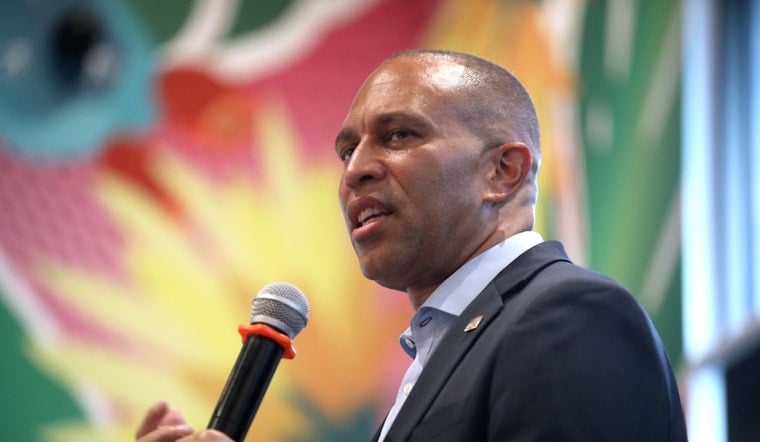
Hakeem Jeffries is putting Medicaid front and center in the midterms, vowing that Democrats will move to undo President Donald Trump’s health care changes if voters return them to power in the House this fall.
At a Tuesday press conference in Buffalo, the House Democratic leader said reversing Medicaid cuts would be one of the party’s first orders of business after the November 3 election, according to the Denver Gazette. He cast the pledge as part of a broader promise to shore up Medicaid, Medicare and Affordable Care Act coverage while trying to push overall health care costs down.
The immediate bullseye is Public Law 119-21, the sweeping tax-and-spending package Republicans muscled through in July 2025. The law created an 80-hour-per-month work or community-engagement requirement for certain Medicaid adults, with states generally required to begin implementation by January 1, 2027, according to the Centers for Medicare & Medicaid Services. A Congressional Research Service summary details additional changes to Medicaid financing, enrollment and provider payments.
The Congressional Budget Office estimates that the law’s Medicaid provisions would leave 7.8 million more people uninsured in 2034 than under current-law projections, including millions affected by the new community-engagement requirement. That is a long-range projection, not a count of people who have already lost coverage, but it helps explain why Democrats are treating the law as a marquee midterm target, according to the CBO.
ACA Subsidies Are Part Of The Same Promise
Jeffries is also tying the Medicaid fight to the enhanced Affordable Care Act premium tax credits that expired on December 31, 2025. HealthCare.gov notes that the extra savings ended at the start of 2026, leaving eligible Marketplace customers staring at higher premiums even if their incomes have not changed.
House Democrats approved a three-year extension of the credits in January, but the bill stalled and never became law. Senate Democrats were still pressing to move the House-passed measure days later, according to the Senate Democratic Caucus. Jeffries’ office has repeatedly described the House vote as a bipartisan effort to keep millions of Americans from seeing their coverage costs spike.
The timing of Jeffries’ promise is no accident. He rolled out an affordability-focused message just as Democrats geared up their bid to reclaim the House, with health care sitting alongside grocery, housing and energy prices in the party’s economic pitch, the Associated Press reported. In New York, the fight is already familiar terrain: Gov. Kathy Hochul and Jeffries warned of drastic healthcare cuts under the Republican package, saying it could put heavy pressure on the state’s Medicaid system.
Winning back the House would give Democrats the procedural vehicle to go after Public Law 119-21, but it would not guarantee success. Any rollback would still have to clear the Senate and get past the White House, leaving Jeffries’ promise as both a policy roadmap and a calculated campaign bet.



.jpg)