

























































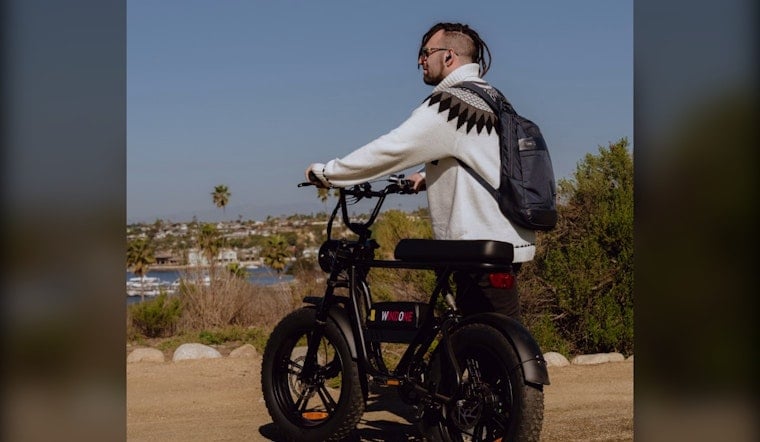
Kansas City is moving to tighten the rules on the fast-growing crowd of e-bikes, scooters and electric motorcycles, with new limits on speed, age and helmets headed for a full City Council vote Thursday.
The Transportation, Infrastructure and Operations Committee on Tuesday advanced a committee substitute for the e-bike proposal, putting Mayor Quinton Lucas’ proposal on the July 30 council agenda. As reported by KCTV5, the measure would spell out rules for three categories of machines: electric bicycles, micro-mobility devices such as scooters and unicycles, and electric motorcycles, or e-motos.
Three categories, three sets of rules
The proposal would lock in Missouri’s three-class e-bike system. Class 3 e-bikes, which provide pedal assistance up to 28 mph, could not be operated by anyone younger than 16, and any modified bike that exceeds class limits could be treated as an electric motorcycle instead.
The location rules are meant to be simple, at least on paper. E-bikes and micro-mobility devices would be capped at 15 mph on sidewalks and 20 mph in bike lanes, multi-use paths and trails. On streets, riders would follow the posted speed limit. E-motos would be kept off sidewalks, bike lanes and trails entirely and allowed only on roadways.
Under the committee substitute, anyone operating an e-moto on a public right-of-way would have to be at least 16 and hold a valid driver’s license or motorcycle permit. Riders under 16 also could not operate a micro-mobility device capable of going 20 mph or more, and passengers would be prohibited unless the device was designed to carry them.
Parents and bike shops would get new responsibilities
Riders younger than 18 would have to wear a properly fitted, securely fastened bicycle helmet. Businesses that sell, rent or advertise e-bikes would also be required to display a flyer or poster explaining the new definitions, age limits, speed restrictions, operator responsibilities and penalties, according to the KCMO City Clerk.
The proposal is aimed at clearing up the fuzzy line between a typical pedal-assist bicycle and the increasingly common electric dirt-bike-style machines. Christina Decker, owner of Midwest Cyclery, told KCTV5 that anything exceeding 28 mph is not an e-bike but a motorcycle that requires a driver’s license, a distinction she said parents should understand before clicking “buy” on a new ride.
Education first, tickets later
The ordinance would take effect 120 days after passage and approval, giving Kansas City time to spread safety information through schools, libraries, community centers and health facilities. The delayed start is also meant to give officials time for public education.
For violations involving a person under 16, a first offense would result in a warning. A second violation could bring a citation and a fee that may be waived after completing an approved safety class, while a third or later violation could bring additional citations or fees.
That step-by-step approach reflects the city’s stated focus on education before enforcement, even as officials highlight growing concern about injuries among young riders. Decker told KCTV5 that the goal is not to eliminate electric transportation, but to make sure families know whether the machine in the garage is legally a bicycle, a scooter or something closer to a motorcycle. According to Open Data KC (data.kcmo.org), Kansas City publishes municipal datasets accessible via API (e.g., /api/v3/views/gqr2-24kw/) that can be used to analyze traffic crashes and related records.
The full City Council is scheduled to consider the measure Thursday. Until then, the proposed speed caps, helmet requirement and e-moto restrictions remain just that, proposed rules that Kansas City riders do not yet have to follow.




