

























































Six people got detained in Platte County. Exactly one got charged. He's the one who wasn't there.
Here is the sequence of events, per the probable cause statement out of Platte County, Missouri, as reported by Northwest MO Info on July 17: narcotics detectives and a SWAT team hit a residence on a search warrant. Five people were inside. All five got detained. Then a sixth man, 61-year-old William R. Terreau of Kansas City, pulled up to the house, and he got detained too.
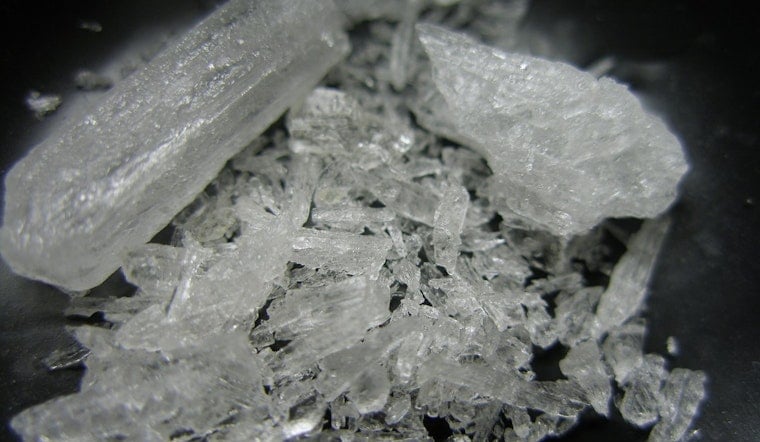
Detectives reported finding methamphetamine and, in the memorable phrasing of the court paperwork, "over a dozen glass smoking pipes." Terreau allegedly told investigators he'd used meth after getting out of jail on an earlier charge. He was arraigned Friday morning on one count of possession of a controlled substance. Bond: $100,000.
The five people found actually inside the house? Three of them are still sitting in the Platte County Detention Center. None of the five has been charged with anything.
Let that arrangement sit for a second. The guy who arrived after the raid is the guy facing a felony. The people who were there when the door came off the hinges are, as of this writing, legally accused of nothing while some of them remain in a cell. That's not a scandal, exactly — prosecutors routinely hold people while they sort out who owns what in a house where six adults and a pile of paraphernalia are all in the same square footage. But it's the kind of detail that gets buried under the phrase "SWAT team executed a search warrant," and it's the most interesting thing in the file.
About that number
The charge here is possession under RSMo § 579.015, and it's worth understanding what that statute actually does, because Missouri is an outlier. Under the statute, possession of any controlled substance other than 35 grams or less of marijuana is a class D felony — no weight threshold, no distinction between a personal-use quantity and a duffel bag. A residue-stained pipe and a kilo land in the same statutory bucket. Unlike states that scale possession charges by drug type or quantity, Missouri treats possession of almost any amount of most controlled substances as a class D felony.
A class D felony in Missouri carries a term of years not to exceed seven, and a fine capped at $10,000. It is also, in practice, one of the most probation-eligible charges in the state. Missouri courts have a drug treatment court in Platte County — a program presided over by an associate circuit judge, running a minimum of one year of intensive supervision, with the Platte County Prosecuting Attorney's Office acting as gatekeeper for admission. A lot of § 579.015 cases end there, or in a suspended imposition of sentence, rather than in Jefferson City.
Which is what makes a $100,000 bond conspicuous. Missouri overhauled its bail rules effective July 1, 2019, after then-Chief Justice Zel Fischer used his State of the Judiciary speech to point out the obvious: people who can't afford bail lose their jobs, can't support their families, and are more likely to reoffend. The rewritten Rule 33.01 tells judges to consider non-monetary conditions first, and only reach for money if those won't secure appearance or public safety — and it explicitly bars setting an amount higher than necessary, after weighing the defendant's ability to pay.
Six figures is a number that, functionally, means detention. Whether it clears that bar is a question for a bond review hearing, and Missouri's rules provide for one: if a defendant is still detained after the initial hearing, a second bond hearing must happen as soon as practicable and no later than seven business days later. Terreau's public defender or retained counsel will almost certainly ask. The court file will tell us whether there's something in his history — prior failures to appear, pending cases, the earlier charge he referenced — that justifies the figure. Right now, the public record doesn't.
The context nobody puts in the police blotter
Meth in Missouri isn't the story it was in 2005, when the state led the nation in clandestine lab seizures and every rural sheriff had a mobile decontamination trailer. The pipes in that house almost certainly held product from a Mexican-manufactured supply chain, not a two-liter bottle in somebody's garage.
The bigger shift is that the overdose picture is genuinely improving and simultaneously getting more stimulant-shaped. UMSL's Addiction Science Team found a 26% drop in Missouri overdose deaths from 2023 to 2024, from 1,948 to 1,450, alongside record naloxone distribution — over 639,000 kits statewide in fiscal 2025. But preliminary 2025 data shows the decline is uneven: deaths involving both opioids and stimulants fell the most, down 38%, while stimulant-only deaths fell the least, down 24%, and opioids' share of all overdose deaths kept shrinking — 71% in 2023, 65% in 2024, 61% in the most recent period.
Translation: the fentanyl emergency is receding faster than the meth one. Meth is becoming a larger slice of a smaller pie. And meth has no naloxone, no buprenorphine, no methadone equivalent — the pharmacological toolkit that bent the opioid curve doesn't exist for stimulants. What exists instead is contingency management, long waitlists, and drug court.
So a case like this one is a small window into what the system does when it has a stimulant problem and mostly criminal-justice tools to address it. Somebody used meth after getting out of jail and told a detective so. The state's answer, at least for the next few weeks, is more jail.
What happens next
Terreau is presumed innocent, and the case now moves through the Sixth Judicial Circuit — arraignment, likely a bond review, a preliminary hearing, then either a plea, a treatment-court referral, or a trial setting. Prosecutors may yet file charges against the three people still held at the detention center, or release them. Case movement is trackable through Missouri's Case.net.
The likeliest ending is the boring one: a plea, probation, supervision, and a felony conviction that follows a 61-year-old man through every job application and rental screening for the rest of his life. The SWAT entry will be the loudest thing that ever happened in the case.



