

























































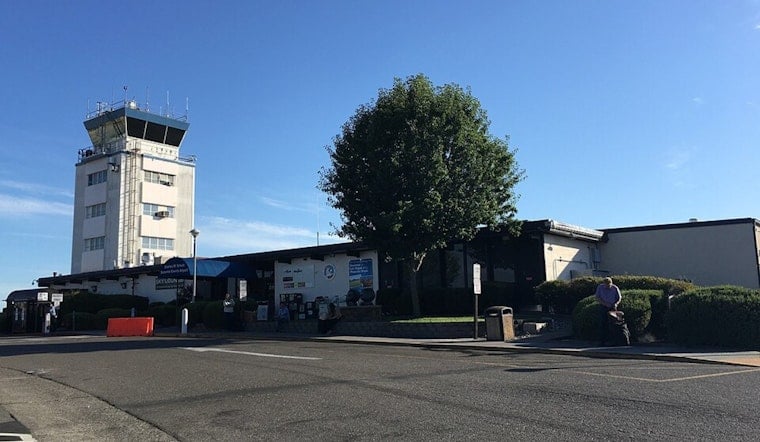
A late-night computer malfunction in the Charles M. Schulz–Sonoma County Airport control tower knocked a required weather-reporting system offline last Friday, forcing several Alaska Airlines flights bound for Santa Rosa to divert and turning routine hops into hours-long odysseys around the Bay Area. Passengers reported long holds, sudden turns toward other airports and a bleary, early-morning slog back to the North Bay.
Three Alaska flights were caught in the mess: Flight 3115 from Portland diverted to Sacramento International, Flight 3302 from San Diego was rerouted to San Jose and placed in a holding pattern at about 10,000 feet, and Flight 3410 from Seattle was sent first to Sacramento, then to San Jose, and ultimately to San Francisco, according to The Press Democrat. The outlet reported that Alaska texted some passengers with notices about refueling and delays, and that airport manager Jon Stout said the county notified the FAA and had the federal system restored later Friday.
Flight-tracking data show the inbound Embraer E175 regional jets diverting to alternate airports or circling in holds while flight crews and air traffic controllers worked around the outage. Flight-status logs list the Seattle to Santa Rosa leg as diverted on the night in question, and manufacturer and regulatory filings indicate the E175 typically carries roughly 76 passengers in U.S. service, so each diversion disrupted dozens of travelers. Public filings and Airportia support the flight and aircraft details.
Why Missing Weather Reports Can Ground Commercial Flights
Federal aviation rules require that airports supply basic, up-to-date weather information, such as visibility, usually through METAR or ATIS broadcasts or an automated observing system. When that information goes dark, especially at smaller airports, controllers and airlines may have to limit or divert commercial traffic until reliable reporting is back online. The FAA’s instrument procedures and ATIS guidance spell out when elements like visibility must be transmitted and how missing data can restrict operations. Those requirements are detailed in FAA guidance.
Passengers Describe A Five-Hour Detour
One traveler quoted in local coverage said what should have been a straightforward trip stretched to roughly five hours, with her final arrival around 2:20 AM after bouncing between multiple airports and waiting on the ground while crews refueled the aircraft and refiled flight plans, according to The Press Democrat. The paper shared a screenshot of a text alert from Alaska advising passengers about a refuel and delay, and other flyers reported similarly long waits and reroutes.
Local Context: More Flights, More Ripple Effects
Sonoma County’s modest airport has added more airline service in recent months, which means a single outage now ripples across a larger slice of local travelers as carriers beef up schedules at STS, the San Francisco Chronicle reported earlier this year. Other major Bay Area airports have also wrestled with brief computer glitches that caused delays, a reminder that even short-lived tech hiccups in towers or terminals can cascade through regional flight plans.
Airport officials say they alerted the FAA promptly and worked to restore weather reporting as soon as possible. Travelers with upcoming flights are urged to monitor airline alerts and the airport’s live status page for any new disruptions or schedule changes.




