

























































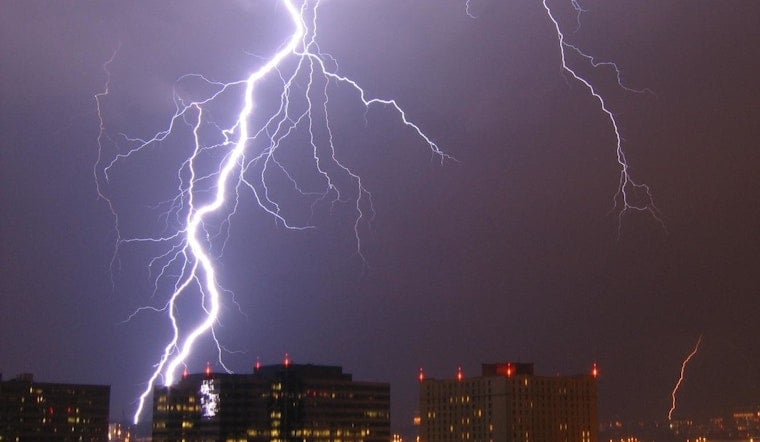
One loud clap of thunder in Seminole County on Monday came with a whole lot of extra punch, after a lightning strike triggered an explosion at an oil storage tank near the tiny town of Little, Oklahoma. The blast shook nearby homes and sent a thick column of black smoke into the sky while fire crews raced to the scene.
Neighbors reported a sudden, gut-rattling boom. One Little resident told local TV they heard a lightning strike followed almost immediately by a loud explosion. According to News On 6, firefighters spent roughly an hour battling the flames before getting the fire under control, and authorities said no one was injured. The station’s coverage was filed by reporter Christian Hans.
Lightning-Related Tank Fires Have Hit Nearby Counties
This was not an isolated freak occurrence. Lightning-triggered fires at oil tanks and tank batteries have turned into an unwelcome theme of Oklahoma’s storm season. A large tank-battery fire in rural Pottawatomie County recently drew multiple fire units after a strike set off another inferno that was covered by KFOR and republished on Yahoo.
The Oklahoma Corporation Commission has highlighted several other lightning-caused tank incidents around Asher and Seminole in its newsletter, underscoring how often severe weather and oil infrastructure collide. Oklahoma Corporation Commission records point to a pattern of lightning striking storage sites in the broader region, while storm-history data from the National Weather Service charts just how frequently dangerous thunderstorms rumble through central Oklahoma.
Why Lightning and Oil Tanks Are a Bad Mix
Aboveground storage tanks, especially those with floating roofs, can be surprisingly vulnerable when lightning hits. A strike can create an electrical arc or ignite vapors along a rim seal, which is exactly the sort of chain reaction operators try hard to avoid. Industry guidance calls for bonding, bypass conductors and other lightning-protection measures to cut down the risk.
Engineering and safety reviews have repeatedly identified lightning as one of the most common natural triggers for storage-tank incidents, which is why firefighters and emergency managers typically treat these scenes as both active fires and potential Hazmat situations. For those who like to dive into the technical side of risk and mitigation studies, there are detailed discussions available through ScienceDirect and other industry standards.
What Officials Are Saying
Authorities on Monday stressed the good news first: no one was hurt, and crews ultimately wrestled the fire under control after an intense response. The initial on-the-ground details, including residents’ accounts of the explosion and the emergency dispatch response, are laid out in the original coverage by News On 6.


