

























































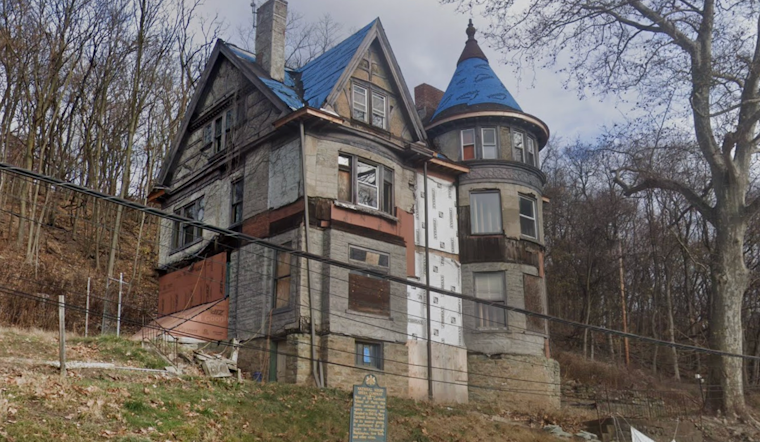
The long-dormant National Negro Opera House in Homewood just got a powerful jolt of cash. The Mellon Foundation has awarded $1.75 million to the nonprofit leading its revival, a gift that organizer Jonnet Solomon announced Tuesday and says will push the years-long restoration back into high gear after a stretch of stalled fundraising. Early work will zero in on stabilizing and permanently repairing the exterior so the turreted 1894 Queen Anne house can once again host public programs.
As reported by 90.5 WESA, the Andrew W. Mellon Foundation's $1.75 million award brings total fundraising to more than half of the estimated $7 million needed to complete the project. WESA notes that Solomon announced the gift on Tuesday and that the Mellon Foundation did not immediately respond to requests for comment.
Where Mary Cardwell Dawson Built a Stage
The house at 7101 Apple Street served as the headquarters of the National Negro Opera Company, which Mary Cardwell Dawson organized in 1941 to train and showcase Black opera talent. As detailed by Opera America and chronicled by the National Trust for Historic Preservation, the site hosted rehearsals and social events and welcomed visitors such as Lena Horne and Cab Calloway. Those sources note that the structure dates to 1894 and is one of the few surviving physical links to mid-century Black opera history.
Funding History And Slow Progress
Solomon and a partner rescued the property around 2000 and formally broke ground on restoration in 2022, but escalating costs have repeatedly slowed the project. The Pittsburgh Post-Gazette reports that Solomon has pegged the full restoration at roughly $7 million and that crews stabilized the building in 2024 to keep it from failing. Earlier philanthropy helped set the stage too: the Richard King Mellon Foundation awarded a $500,000 grant that jump‑started repairs and planning.
"No one believes in me, and they just told me flat out," Solomon told 90.5 WESA, summing up the long odds she has faced while fundraising. She said the immediate goal is permanent restoration of the exterior, including the roof and front porch, and that the Mellon gift will allow crews to focus on those elements this year. Solomon declined to provide further details about other promised funds.
Local Partners And What Comes Next
Local partners such as Pittsburgh Opera and the Pittsburgh History & Landmarks Foundation have been involved in planning and technical assistance, helping shape how the site could be used once restored. Those organizations say the renewed house could function as a museum, performance space, and educational center that highlights the city's Black musical heritage. Community leaders and preservationists hope the Mellon award will unlock additional foundation and public dollars needed to finish the work.
Solomon says there is "more good news coming" but declined to offer specifics, as fundraising continues and crews press to turn temporary fixes into a lasting public asset. For neighbors and opera historians alike, the Mellon award is the clearest signal yet that the National Negro Opera House might finally be returned to public life after decades on the brink.





