

























































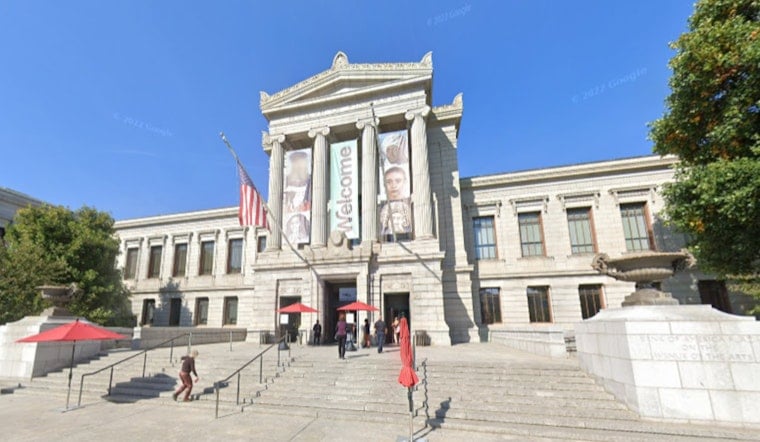
The Museum of Fine Arts has quietly turned its 18th-century American galleries into something closer to a history classroom with sharp elbows. Grand Revolutionary scenes and polished society portraits now sit just steps from objects that put slavery, Indigenous life and colonial trade front and center, sharpening a long-running argument over how Boston museums should tell the city’s origin story as the nation’s 250th anniversary creeps closer.
The reworked galleries opened June 19, a rollout the museum bills as a reimagining that "integrates art from across North, Central, and South America, and the Caribbean," bringing more than 400 objects into conversation in new ways. Curators say the plan was to pull long-stored works and recent commissions into the same spaces as the monumental Copleys, so the definition of eighteenth-century American art stretches beyond the usual suspects, according to MFA.
Galleries Built To Keep Visitors A Little Uncomfortable
Those showpiece canvases by John Singleton Copley and Thomas Sully now share walls with works that spell out the ties between elite Boston households and the machinery of slavery and colonial trade. The Boston Globe reports that this kind of deliberate friction is very much the point, with the juxtapositions engineered to leave visitors uneasy rather than reassured. The Globe also reports that museum leaders walked away from roughly $400,000 in federal funding after worrying that grant conditions could box in how frankly the galleries address race and inclusion, as reported by The Boston Globe.
Royall Wealth, Local Roots And The Cost Of Sugar
That discomfort comes into sharp focus in a Copley portrait of Mary and Elizabeth Royall, which now hangs alongside paintings of unnamed Black women and labels that spell out how the family’s fortune flowed from Caribbean sugar and enslaved labor. The Royall House and Slave Quarters has documented that the Royalls were the largest slaveholding family in Massachusetts, a backstory the MFA is now putting at the center of the narrative instead of in the footnotes, according to Royall House & Slave Quarters.
Federal Red Tape, Court Fights And Fundraising Jitters
The National Endowment for the Humanities requires grantees to "comply with all applicable Executive Orders" and to certify that they follow federal guidance on diversity and related programs, language that has added a layer of caution to museum fundraising this year, according to NEH.
Legal analysts point out that those executive orders and certification rules have helped trigger lawsuits and shifting court injunctions, creating exactly the kind of uncertainty cultural institutions now weigh when they decide whether to chase federal money, according to legal analysis by Fisher Phillips.
The MFA’s new 18th-century American rooms are framed as conversation starters rather than comfort zones. Alongside the Copleys and Sullys, visitors find an orrery clock ticking through celestial motions, a poem jar by enslaved potter David Drake, and newly commissioned regalia by Wampanoag artist Julia Marden, all insisting that Boston’s eighteenth-century story is transatlantic, contested and far from tidy. The museum has packaged the overhaul as "Art of the Americas: 1700–1800," and it is poised to draw close public scrutiny and debate in the weeks ahead, according to MFA.




