

























































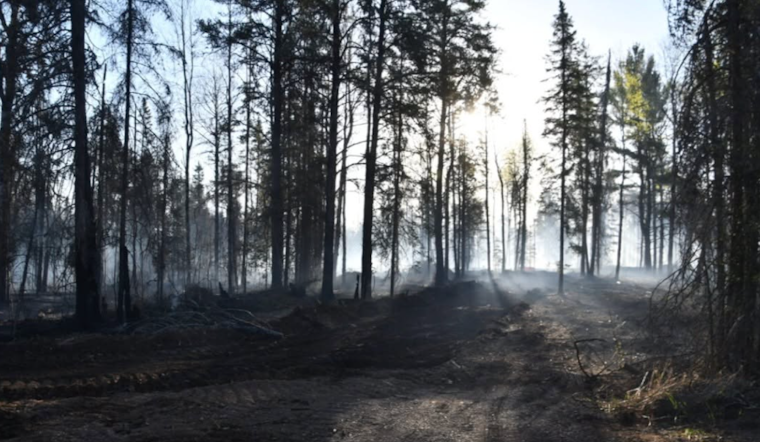
The Minnesota Department of Natural Resources is coming after a Duluth man for a whole lot more than marshmallows and firewood. The agency has filed a civil claim seeking roughly $4.3 million from Parker John Wilson, saying his unattended campfire triggered the Camp House wildfire that ripped through the Brimson area on May 11, 2025. The blaze burned about 12,071 acres, forced evacuations, and left residents picking through wreckage along Highway 44 and nearby lakeshores. The civil move lands more than a year after the criminal citations were handled and adds another chapter to a long recovery.
In a recent statement, the Minnesota Department of Natural Resources said it is seeking an estimated $4.3 million from Wilson, a figure the agency says reflects its calculation of firefighting and emergency-response costs tied to the Camp House blaze, according to KSTP.
The department says it is pursuing the money under the Minnesota Wildfire Act, which authorizes the state to recover costs tied to fighting, stopping, or putting out wildfires, according to the Minnesota Revisor of Statutes. The DNR also noted that it "does not initially consider a defendant’s ability to pay" when tallying what it will try to recover, per FOX 9.
Wilson, 27, of Duluth, pleaded guilty in November 2025 to the forestry offense of "failure to extinguish a fire" and was ordered to pay $190 in fines and fees, court records show, according to the Duluth News Tribune. That misdemeanor outcome settled the criminal citation but did not block the state from later seeking civil recovery under the Wildfire Act.
Incident reports and interagency updates list the Camp House blaze at about 12,071 acres and note at least 144 destroyed structures, while local and county assessments later produced higher damage tallies with triple-digit losses cited in multiple briefings. Officials say the fire spread quickly through unusually dry fuels and strong winds, outpacing early containment efforts, according to InciWeb.
Why the DNR Is Going After Civil Costs Now
Civil cost recovery is a separate lane from criminal prosecution, and the DNR says it can move on suppression costs only after it has a solid handle on expenses and damage. The agency pointed to its earlier citation of Wilson and noted that decisions about civil penalties would come after the criminal case wrapped up, according to the Duluth News Tribune. In the meantime, county assessments and rebuilding efforts in Brimson have continued, and state officials say those evolving tallies factor into any recovery request.
What the Law Covers, and What It Leaves Out
The Wildfire Act allows the state to claw back the costs of firefighting and emergency response, but it does not let the DNR seek money for private property losses. The agency said its claim does not include homeowners’ damaged or destroyed buildings, according to FOX 9. If the state prevails in court, it could be awarded suppression and response costs, and a judge could later weigh a defendant’s ability to pay when setting restitution or a payment plan.
For people in and around Brimson, the filing is another reminder of how hard the fire hit and how far there is to go. Coverage a year after the blaze highlighted volunteers, benefit events, and the slow, painstaking work of rebuilding cabins and lake homes, according to Northern News Now.
The DNR says it cannot share additional details about the cost-recovery push because the case is in active litigation, according to KSTP. The civil claim will now work its way through the courts, and the agency has not given a timeline for when the matter might be resolved.





