

























































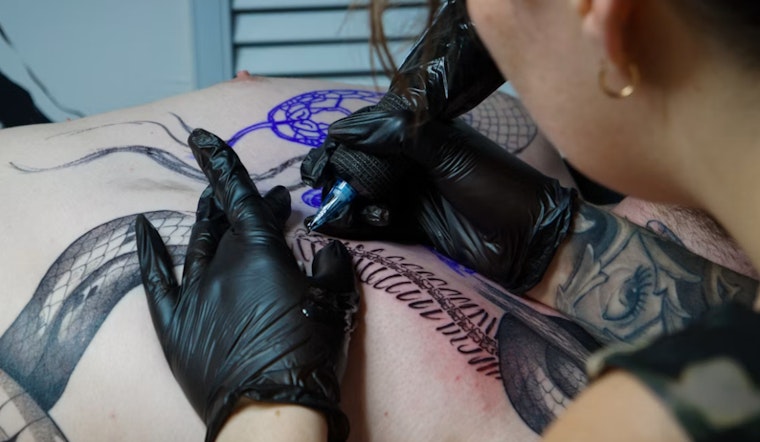
Most North Carolina tattoo artists still work without a formal, state-recognized certificate proving they have completed blood-borne pathogen training, leaving customers to size up cleanliness on their own. State rules do require tattooists to follow blood and body-fluid precautions, but there is no widely advertised training credential a client can check before booking an appointment.
In a July 9 review of inspection lists and shop websites, relatively few studios were found publicly advertising their artists’ formal BBP training, according to the WRAL report. Kate Conners, director of education for the Alliance of Professional Tattooists, told the Raleigh News & Observer that infection control "goes beyond wearing gloves" and that thorough training teaches artists to think through every surface and every decision during a procedure.
Why training matters
Dermatologists and public-health officials have treated atypical mycobacterial infections and other complications tied to poor technique, and county records show dozens of complaints over recent years, as reported by WRAL. Those cases highlight how training can shape both infection prevention and early recognition of problems when they do occur.
What the law says
State law requires tattoo artists to hold a tattooing permit and allows local health departments to inspect establishments, according to G.S. 130A-283. The statute does not spell out a formal statewide training certificate. Administrative rules lay out detailed sanitation standards and inspection checklists, yet they do not currently mandate an annual BBP-training credential for every artist under existing regulations.
9 ways to spot a clean shop
Start by booking a visit or consultation before you commit to the ink. A reputable artist will welcome questions, walk you through the workspace and explain sterilization and aftercare routines, instead of brushing you off or rushing you.
Look for basic cues. Artists should not be eating, drinking or smoking in the tattoo room, and there should be no non-working animals or random clutter in the procedure area. Those are the kinds of sanitation failures called out in local inspection forms and in coverage by the Raleigh News & Observer.
Confirm that the studio sterilizes reusable parts and keeps autoclave records. The state’s inspection checklist requires autoclave effectiveness testing once a month with biological strips and recordkeeping for review, so it is reasonable to ask to see sterilization logs as outlined by the NC Department of Health and Human Services. If instruments are not packaged sterile or the shop cannot show testing records, that is a major red flag.
Gloves are necessary but not sufficient. Artists should scrub hands and forearms, change gloves between patrons and use gowns or lap cloths when appropriate. Industry organizations like the Alliance of Professional Tattooists promote this kind of training and transparency so clients understand what to expect and why specific steps matter.
Watch for single-use ink caps and freshly poured inks. State rules specify that individual containers of dye or ink be used for each patron and discarded immediately after work is finished. Artists should open single-use needles in front of you and use a new needle or needle set for each client, consistent with inspection guidance at the Division of Public Health.
If the artist needs to shave the area, it should happen before the prep cleaning. The site should then be cleaned with a germicidal solution in a circular motion before the stencil is applied. A professional artist will walk you through each step and the products they use, and you can ask for clarification or reschedule if the explanation does not add up.
Clean and ready-to-use instruments, dyes and stencils should be stored in closed, sanitary containers, and sterile instruments should stay in sealed packaging until they are needed. Disorderly storage and open sterile packs are practical warning signs that protocols might be slipping.
Ask whether the artist has completed blood-borne pathogen training, where they took it and whether the shop requires CPR or first-aid certifications. Some studios choose to require extra credentials even where the state does not. If an artist refuses to discuss training or cannot show a certificate, it may be time to look for another studio.
Finally, check for a current tattooing permit posted in plain view, along with an inspection report or score card if it is available. For extra reassurance, you can call your county health department to confirm a permit or ask about the shop’s inspection history.
What lawmakers proposed
In 2025, lawmakers filed House Bill 760 to require annual BBP training that would have to be verified by the Department before issuing or renewing a tattooing permit. The measure was introduced in April and referred to committee. As drafted, H.B. 760 would tie permit eligibility to proof of OSHA-standard blood-borne pathogen training, a change advocates say would close the current gap if it is enacted.
For now, if you are getting ink in North Carolina, ask to see the artist’s permit and any BBP or CPR documentation, and keep the nine cues above in mind. Your county health department can confirm a permit and inspection history if you want to double-check a studio before you settle into the chair.





