

























































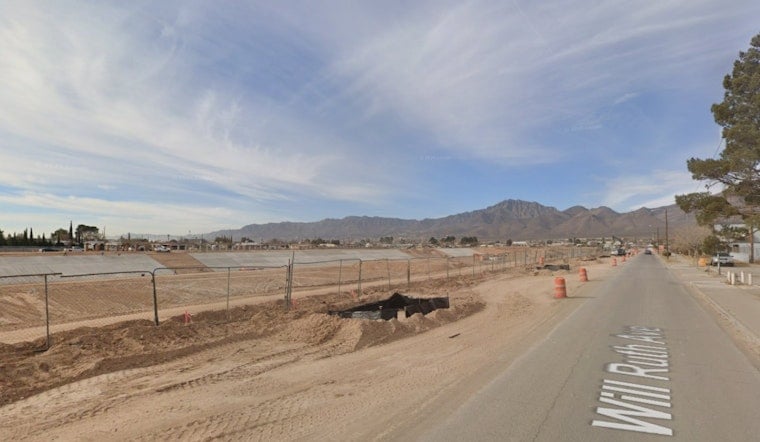
What looks like a giant construction pit in Northeast El Paso is actually the city’s next big line of defense against flash floods. Heavy equipment is carving out a roughly 25-acre basin for Will Ruth Pond, a stormwater project designed to catch runoff racing down from the Franklin Mountains before it barrels into nearby streets and homes.
Engineers say the basin will be able to store more than 100 million gallons at full depth, which would make it the largest stormwater pond in El Paso Water’s history. The utility expects the excavation work, which is the first phase of the project, to wrap up this fall. Later phases will add the conveyance piping and other systems that move water into and out of the basin.
The project sits near Will Ruth Avenue and Threadgill Avenue and is intended to intercept mountain runoff before it reaches neighborhoods, according to KFOX. The station reports the footprint at about 25 acres, with capacity for more than 100 million gallons. Project staff told the station the basin is meant to reduce downstream flooding in one of Northeast El Paso’s most flood-prone areas.
Construction, Contractors And The First Work Package
El Paso Water’s Public Service Board packet and minutes show the utility has approved a Construction Manager At-Risk contract for Will Ruth Pond and accepted a guaranteed maximum price for the first work package, which covers demolition, excavation, and utility relocations. The documents list Jordan Foster Construction as the CMAR.
According to the board materials, Phase 1 work includes pond excavation, concrete lining, stormwater pipe installation, and relocation of sanitary lines so the basin is ready for the later conveyance improvements. Phase 2 remains focused on the Palisades dam and conveyance upgrades that will move stormwater into the new pond.
As the scope has evolved, so has the price tag. The utility now estimates the total program in the tens of millions of dollars, and officials told KFOX the current estimate is roughly $60 million after design changes and higher material costs. One of those changes, adding a wet-well pump to remove standing water after storms, contributed to the increase.
KFOX also reports that El Paso Water secured a $5 million Texas Water Development Board grant to help cover the conveyance work and that the utility expects the overall program to be completed by 2029.
Floodplain Relief, Land Deals And Potential Savings
City presentation slides and council materials show the basin will serve a contributing drainage area of about 13 square miles. Those municipal records list the pond’s capacity at roughly 353 acre-feet, or about 115 million gallons, and estimate that Phase 1 could remove approximately 600 parcels from the 100-year floodplain.
The same documents outline land acquisition activity for project parcels, including offers and appraisals for property on Threadgill Avenue. City staff estimates that if affected properties carry flood insurance, the changes could translate into roughly $600,000 in annual premium savings.
The records also stress that Will Ruth Pond is designed to reduce flood risk, not to eliminate flooding within the watershed.
Why The Utility Is Moving Now
The Will Ruth project is part of a faster building schedule El Paso Water has adopted to push more stormwater projects forward sooner. El Paso Matters has reported on the utility’s effort to compress what had been a decades-long stormwater program into a shorter timeline, along with the tradeoffs that create for ratepayers and neighborhoods.
Public documents and meeting minutes show the utility is bundling construction packages and chasing grant funding in an attempt to keep rate impacts in check while it works on multiple flood-control fronts at the same time.
What Neighbors Will Notice Next
Board documents link Will Ruth Pond to the Palisades stormwater work and trailhead improvements, and El Paso Water says the site is ultimately intended to include a trail, landscaping, and other neighborhood amenities once the heavy construction is done.
In the near term, crews are focused on finishing excavation and stabilizing the basin’s slopes so it is ready for the conveyance work and pump systems planned in later phases. The utility says it will keep coordinating with nearby residents as construction continues over the coming seasons.




