

























































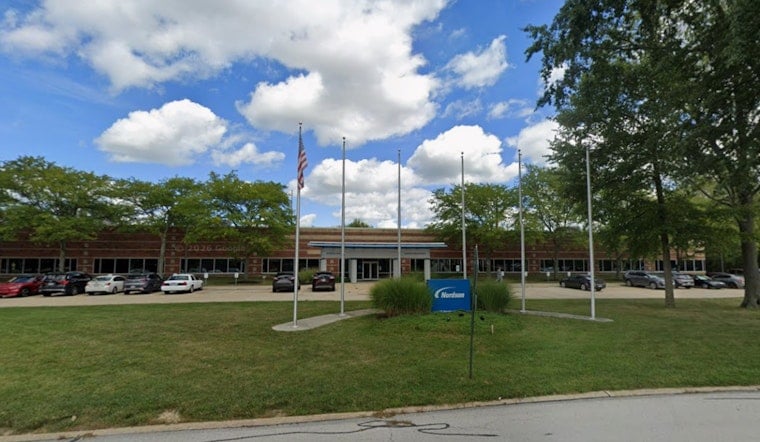
A developer wants to turn Nordson’s soon-to-be-vacant Amherst campus into a hyperscale data center that would pull roughly 45 megawatts of power, raising big questions about whether the village’s electrical grid and water systems can keep up. The plan would retrofit three large industrial buildings, and local officials are weighing promised economic gains against potential strains on infrastructure and the environment.
The pitch
Cervenka Development Partners is asking for a zoning variance to convert three former Nordson buildings into a 45-megawatt hyperscale data center, according to Cleveland.com. The proposal outlines a high-density computing campus covering roughly 240,000 square feet, with major new electrical infrastructure and upgraded cooling systems needed to keep the servers running.
Why the site is available
Nordson shifted industrial coatings manufacturing off the Amherst property in 2024, according to an Ohio WARN filing, leaving most of the campus sitting empty. Commercial listings now market the parcels for sale, with building details and photos posted on LoopNet. That vacancy has caught the eye of data-center developers eager to retrofit existing industrial space instead of carving up undeveloped land.
Regional debate now in focus
The Amherst proposal lands in the middle of a broader regional fight over hyperscale data centers across Northeast Ohio. Earlier this year, a larger facility proposed in Cleveland was rejected, a high-profile dispute that pushed data-center siting into the public spotlight, according to News 5 Cleveland. Around the region, neighbors and officials have been asking tough questions about noise, neighborhood impacts, real tax benefits and the pressure these power-hungry projects put on local utilities. Amherst’s decision could become a case study for other towns eyeing conversions of aging industrial properties.
Water and cooling questions
Cervenka has told officials the Amherst project would rely on a closed-loop cooling system, which recirculates water but still needs periodic makeup water to offset evaporation and blowdown losses. That detail has drawn scrutiny from residents and city leaders. Industry research shows systems that combine closed-loop and evaporative cooling can still consume significant amounts of water depending on the design and local climate, and those impacts are increasingly central to where data centers get built, according to analysis by the ITIF. Amherst officials will have to decide whether the village’s water and stormwater networks can support that demand alongside existing users.
What officials say and next steps
City leaders say the developer will need to demonstrate that the Nordson buildings have no viable alternative uses before a data-center conversion gets the green light. A variance request was scheduled to go before the Board of Zoning Appeals on July 19, according to Cleveland.com. Additional reviews by the Planning Commission and other local boards will examine traffic, stormwater and utility impacts, per the City of Amherst Planning Commission.
Mayor Mark Costilow told reporters he is hearing opinions on both sides of the fence and has not taken a position as the formal review process gets underway.





