

























































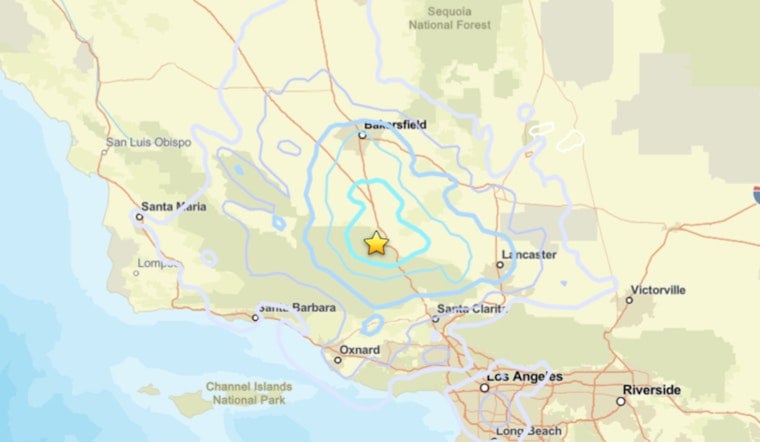
A pre-dawn earthquake rattled mountain communities near Frazier Park early Sunday, jolting some residents awake and knocking a few items from shelves in area homes. The short, sharp temblor was widely felt across parts of Southern California but produced no immediate reports of major structural damage or fatalities.
According to a post-message summary from ShakeAlert, the quake originated at about 3:38 a.m. local time and registered a final system magnitude of 4.4, with an epicenter near Frazier Park based on data from the regional seismic network. The assessment drew on reports from dozens of seismic stations across the region, according to the summary.
The U.S. Geological Survey and early local reports initially put the temblor at about magnitude 4.2 and said it struck roughly one mile from Frazier Park. People as far away as parts of Los Angeles and Orange counties reported feeling the shaking. As reported by CBS Los Angeles, there were no immediate reports of injuries or major damage.
ShakeAlert and early warnings
The ShakeAlert system pushed out automated messages within seconds of the quake. System logs show an initial message about 4.6 seconds after the origin, a peak message interval of roughly 7.9 seconds, and a final system update about 20 seconds after origin. The post-message summary notes that the event was below the Wireless Emergency Alert threshold for a nationwide cellphone WEA distribution, even though many regional sensors contributed to the magnitude and location estimates. The document details timing, station counts, and the system's evolving magnitude estimates, according to ShakeAlert.
Why seismologists are watching
The small Frazier Park event is not considered dangerous on its own, but it comes against a backdrop of growing scientific attention to the region. A June study modeling 1,000 years of earthquakes found that stress on parts of the southern San Andreas and San Jacinto systems is at or above levels seen in the past millennium. The research, summarized by the University of Hawaiʻi at Mānoa and reported in outlets including the San Francisco Chronicle, describes the Cajon Pass as an “earthquake gate” that can influence whether a rupture stays confined to a single fault or propagates to adjoining systems.
Earlier quakes and what to watch
Californians have already seen larger temblors this month. A magnitude 5.6 quake near Redwood Valley in Mendocino County on June 24 produced localized damage and pockets of outages, underscoring how even events well north of Los Angeles can strain infrastructure and prompt widespread alerts. Local coverage of that event and its aftermath is available from outlets such as KTVU.
For now, officials report no widespread problems tied to the Frazier Park tremor, and monitoring is ongoing. State and federal partners maintain guidance on preparedness and how to receive early warnings. Residents who want alerts can review the state's resources on how ShakeAlert messages are delivered in California at Earthquake.ca.gov.





