

























































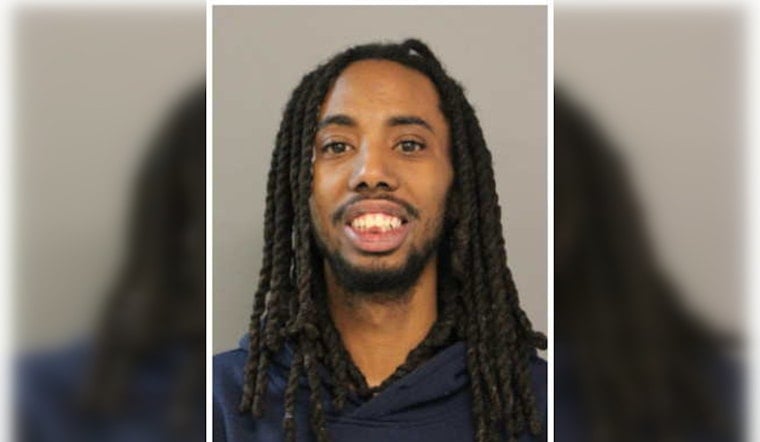
A Chicago man whose 2021 CTA bus case already raised eyebrows is again at the center of a transit crime story, this time for robbing a sleeping passenger on the Red Line. He pleaded guilty and picked up a three-year prison sentence, but because of time already served and routine good-conduct credits, he is not expected to immediately head back behind bars.
Three-Year Sentence After Red Line Robbery
Court records show that Maurice Lowry pleaded guilty to one count of robbery and received a three-year sentence from Judge Tyria Walton in Cook County court. Prosecutors say Lowry and an unidentified accomplice went through a man's backpack while he slept on a southbound Red Line train near 79th Street on May 28, 2024. When the victim woke up, the confrontation turned physical, and transit officers later arrested Lowry at the State-Lake station.
As CWBChicago previously reported, Lowry first drew attention in December 2021 when prosecutors said he forced a CTA bus driver, at gunpoint, to make an off-route stop. He later received a one-year sentence on a firearms charge in December 2022 stemming from that incident.
Transit Prosecutions Under New Microscope
The case lands amid a renewed push to crack down on crime across Chicago's transit system. In May, the Cook County State's Attorney's Office announced a Regional Transit Task Force designed to "strengthen the prosecution of transit-related crime." The initiative pulls together the Chicago Police Department, federal partners, and local transit agencies to improve information-sharing and training so that cases involving riders and transit workers can be presented more effectively in court.
How the Sentence Math Shakes Out
On paper, three years might sound like a long stretch. In practice, Illinois' sentencing rules can cut that significantly for many offenses.
According to CWBChicago, court records show Lowry received credit for 564 days already spent in custody. Under Illinois' standard day-for-day good-conduct rules, that is enough to cover the roughly 547 days he would normally have to serve on a three-year determinate sentence.
State law provides for day-for-day credits in many determinate sentences, meaning an inmate who stays out of trouble in custody can effectively serve about half of the imposed term. The statute is outlined by the Illinois General Assembly, and the Illinois Supreme Court has explained how the structure works in practice in Justia. Those credits are not automatic; they can be revoked for disciplinary issues, so actual time served depends on an inmate's behavior.
What Happens Next
Because Lowry's credited time already exceeds what he would be expected to serve under the day-for-day system, he is not expected to be returned to prison immediately to serve additional time on this case. Any further steps will depend on administrative processing by the Illinois Department of Corrections, which will determine when, or whether, he is sent to a state facility.
The plea deal and his earlier bus episode arrive just as prosecutors and transit agencies are trying to send a tougher message on CTA crime through the Regional Transit Task Force, according to the Cook County State's Attorney's Office.





