

























































Utah health and law enforcement officials say a powerful veterinary sedative has started turning up in the state’s street drug supply, raising fresh worries about overdoses and how to save people in time. Medetomidine, sometimes called "rhino tranq," can cause prolonged deep sedation, a slow heart rate and low blood pressure. Because it is not an opioid, naloxone on its own may not fully wake someone up. Its arrival comes as law enforcement continues to seize large amounts of fentanyl across the state, increasing the chances that people buying pills or powder on the street will encounter unpredictable and dangerous mixtures.
The Utah Opioid Task Force and the Utah Fentanyl Task Force notified community partners this week that medetomidine had been detected in state drug samples, as reported Friday by KJZZ. Dr. Jen Plumb, a physician and state senator who works with Utah Naloxone, told KJZZ the sedative is sometimes found mixed with fentanyl and "can leave a person blacked out for four, six, eight hours," which makes both on-the-spot rescue and later medical care more complicated.
DEA Seizures Show How Much Is Moving Through Utah
The Drug Enforcement Administration's Rocky Mountain Field Division reported this week that it has seized roughly 613,619 fentanyl pills and about 10 kilograms of fentanyl powder in Utah year to date, underscoring how much illegal product is moving through the state. The agency warned that interstate corridors such as I-25 and I-70 are major trafficking routes and that high seizure totals increase the likelihood that contaminated pills and powders will circulate in local markets, according to the DEA.
Why Medetomidine Changes The Overdose Picture
Medetomidine is an alpha-2 agonist veterinary sedative that is not approved for people and is being detected more often in seized drug samples, the Centers for Disease Control and Prevention says. Naloxone, the opioid reversal drug commonly known as Narcan, will reverse co-occurring opioids like fentanyl but does not directly reverse the sedative effects of medetomidine. The CDC also warns that exposure can lead to prolonged unconsciousness and severe withdrawal that may require intensive care. Health agencies recommend treating suspected overdoses the same way as opioid overdoses, giving naloxone if available and seeking emergency care, while recognizing that additional monitoring and support may be necessary, per the CDC.
What Clinicians And Officials Recommend
Local clinicians and harm-reduction advocates say people should treat any suspected overdose as an emergency and use naloxone whenever opioid exposure is possible. Dr. Jen Plumb told KJZZ that people should "administer naloxone, call 911, continue to monitor the person's breathing and stay with them until emergency services arrive."
Harm-Reduction Steps Underway In Utah
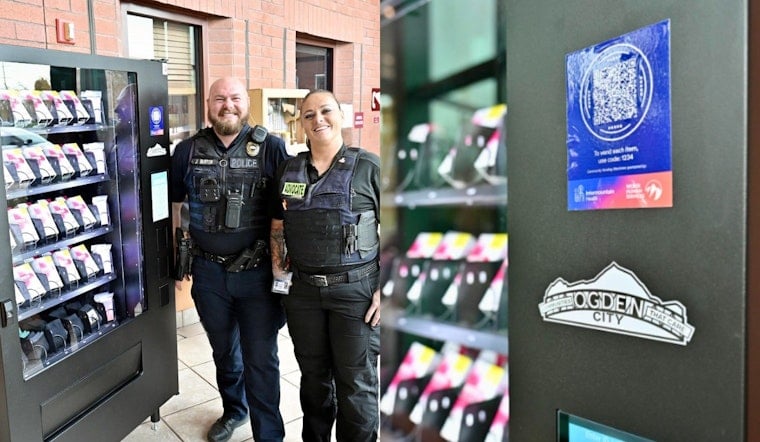
Some Utah counties are already trying to lower the odds of a fatal outcome by expanding access to naloxone. The Weber County Sheriff's Office installed a vending machine that dispenses free naloxone and has placed similar dispensers at shelters and community clinics, according to KSL. Public-health experts also encourage carrying naloxone, not using drugs alone, calling 911 in an emergency, and using drug-checking tools where available. The CDC notes test strips can detect some adulterants, including fentanyl and medetomidine, at participating sites.
Legal Note
Medetomidine is not currently scheduled under the federal Controlled Substances Act, which complicates enforcement and diversion-control options. The DEA's diversion program has urged increased surveillance and public-health coordination as detections rise. Tracking and responding to this evolving mix will rely on forensic labs, public-health reporting and continued cooperation between law enforcement, clinicians and harm-reduction programs, the DEA says.





