

























































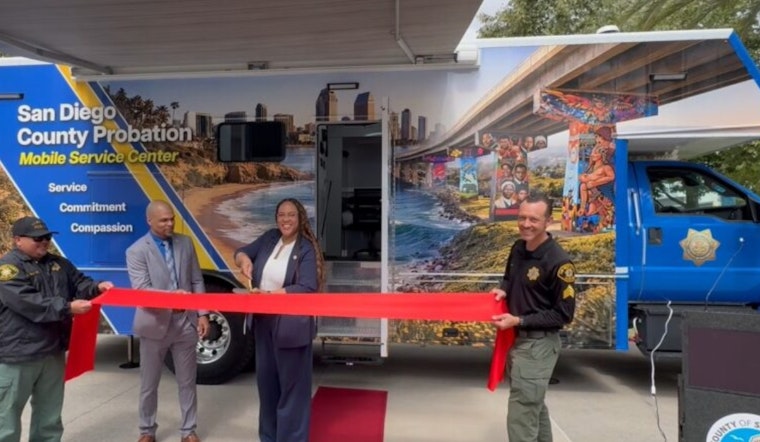
San Diego County is taking probation on the road, rolling out two Mobile Probation Service Centers that are essentially office-on-wheels parked right in local neighborhoods. The goal is to help probation clients and other residents get around transportation hurdles and plug into housing support, Medi-Cal enrollment, mental health care and substance-use treatment. County officials say the vehicles were introduced in late May and started regular field operations in June 2026.
What the vans will do
The mobile centers are set up to offer screenings, on-site assessments and referrals to substance-use disorder treatment, mental health services, and education and employment programs. Staff will also hand out food, hygiene kits and naloxone to people who need them, according to San Diego County News Center. The county announced the rollout on X and said partner agencies will ride along so residents can tap into services that are usually not available in the field.
How it's funded
The vehicles were paid for through the state’s Mobile Probation Service Centers grant program created by the 2022 Budget Act. The California Grants Portal lists San Diego County as receiving roughly $1.2 million to stand up two centers. Records from the San Diego County Board of Supervisors show the board signed off on accepting the BSCC award and ordered competitive solicitations to purchase the vehicles, with the formal authorization laid out in those documents.
Where you'll see them
Probation officials say the mobile centers will be dispatched to rural pockets, resource fairs and neighborhoods with heavy probation caseloads. The idea is to meet clients where they live and cut down on missed check-ins and court appearances. By teaming up with community-based organizations and existing mobile providers, the department aims to reach residents who might otherwise skip appointments because they lack transportation or simply do not know what help is out there.
Officials' words
“Our clients and our community deserve the same level of excellence,” Chief Probation Officer Tamika Nelson said, underscoring the department’s push to bring services directly to the spots where they will have the most impact. Nelson and department materials present the mobile units as part of a larger strategy to lean on evidence-based practices and partner networks to reduce barriers to supervision and support, according to CPOC.
How it fits statewide
San Diego is joining a growing list of California counties that have turned to mobile probation units to ease transportation problems and keep people connected to services instead of cycling back through the courts. In Riverside and Santa Clara counties, similar setups have been used for outreach, referrals and virtual check-ins with unhoused and hard-to-reach clients. Riverside County is one recent example of that approach in action.



