

























































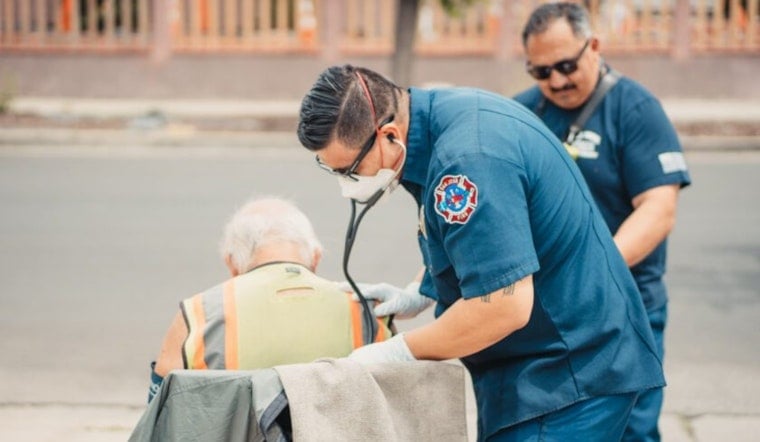
San José is gearing up to put a small but specialized crew on some of its toughest 911 calls, training firefighter-paramedics to handle complex medical, behavioral health and social needs through a new community paramedicine pilot funded in this year’s budget. The one-year effort comes with $764,000 to staff a compact team and buy equipment so responders can steer people away from emergency rooms and into mental health care, housing support or home-based services. If state regulators sign off, the city expects the program to start street-level work this fall.
According to San José Spotlight, the City Council approved the pilot as part of the FY 2026-27 budget process, and the funding will cover three positions plus equipment. The same reporting notes that the paramedicine team is designed as a two-member response unit, with a fire captain assigned to build out the program. Fire Chief Robert Sapien told the outlet the goal is to pull people out of a cycle of really high-cost services that don’t give them what they ultimately need.
How the pilot would work
The city’s plan is to send these specially trained firefighter-paramedics to low-acuity calls and frequent 911 users, then offer options other than a trip to a hospital emergency department. That can include referrals to mental health providers, housing agencies or post-discharge follow-up, instead of the usual ambulance-and-ER routine.
The city’s Manager’s Budget Addendum lays out the milestones: a target to launch the pilot program by October 2026 and an evaluation by June 2027. Local leaders say the small team will assess living conditions, medical history and social needs right on scene, then connect patients with the care path that actually fits their situation.
Where the money comes from
The $764,000 price tag is covered by settlement money San José received from national opioid litigation, which the city chose to put into this pilot as a one-time investment. The Mayor’s March Budget Message directed staff to design a community paramedicine pilot, set aside one-time funding for it and, where possible, lean on opioid settlement dollars. That guidance ultimately shaped the budget line that launched the program.
County and state context
San José’s move follows local and statewide experiments that suggest community paramedicine can trim costs and cut unnecessary ER visits. A Santa Clara County Nurse Navigator pilot that redirected low-acuity 911 callers to telehealth and other services estimated about $405,512 in reduced patient healthcare charges during its trial phase, according to the county’s closure report from Santa Clara County EMS.
At the state level, California’s Emergency Medical Services Authority has issued guidance that allows community paramedicine and triage-to-alternate-destination programs under local medical oversight. That framework loosens some scope-of-practice limits for paramedics so they can legally route patients to more appropriate destinations than the nearest ER.
What to watch
City documents spell out specific metrics that will decide the pilot’s fate. According to the Manager’s Budget Addendum, the city will track how many frequent 911 users are connected to definitive care pathways, what share of responses end with alternate-destination transports and how repeat 911 use changes over time. Those numbers will determine whether the pilot grows into a larger program or stays a short-term experiment. Staff will report results to council committees and use the data to guide any decision about expansion.
Advocates are backing the move. “Community paramedicine recognizes that health outcomes improve when medical providers, behavioral health professionals and community organizations work together,” Rovina Nimbalkar of NAMI Santa Clara County told San José Spotlight. City officials say the pilot is aimed, for now, at proving cost savings and connecting residents with services, not increasing ambulance runs.





