

























































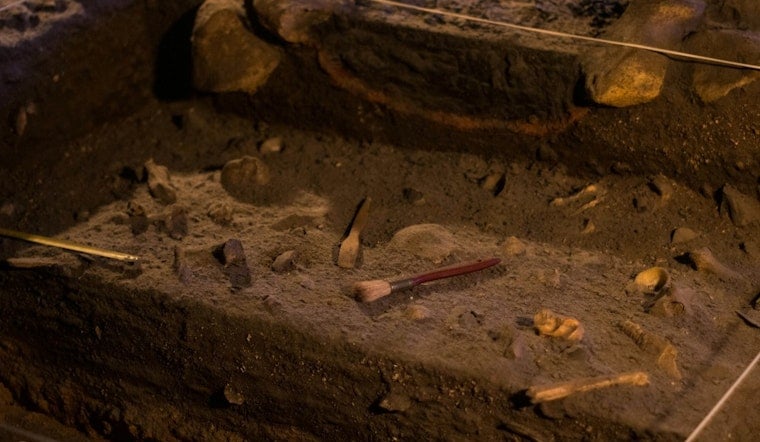
For more than six decades, a set of bones pulled from Santa Rosa Island has quietly sat at the center of a very big question: who were the first Californians, and how did they get here? The fragments, commonly known as the Arlington Springs remains, were first exposed in a stream cut in 1959 and have been radiocarbon dated to about 13,000 years. That makes them some of the oldest directly dated adult human bones in North America.
Discovery and dating
In 1959, archaeologist Phil C. Orr spotted a femur fragment eroding from the wall of Arlington Canyon and quickly plaster jacketed the block for long term study. The National Park Service reports that later protein extractions and AMS radiocarbon assays, led by John R. Johnson, yielded a calibrated age of approximately 13,000 calendar years for the bone. Fieldwork and stratigraphic analysis published by Johnson and colleagues in a 2002 report confirm that the bones came from a deep, terminal Pleistocene context. Johnson et al. 2002.
Coastal migration and seafaring
The Arlington Springs remains often show up in debates over how people first moved into the Americas. One popular scenario, the coastal migration model, suggests early people traveled down the Pacific coast using watercraft and following rich kelp bed routes. Researchers working with the Santa Barbara Museum of Natural History point out that the island setting strongly implies seafaring at the end of the Pleistocene, a point the museum emphasized when it documented research at the site and later returned the remains under NAGPRA. Santa Barbara Museum of Natural History.
Pygmy mammoths and a changing island
During the Late Pleistocene, Santa Rosa was part of a larger Santarosae landmass at lower sea level. That bigger island hosted dwarf, or pygmy, mammoths that disappear from the record around the same time people show up. Isotopic and radiocarbon studies in the peer reviewed literature indicate that pygmy mammoths persisted on the northern Channel Islands until roughly the terminal Pleistocene, making their extinction roughly contemporaneous with the earliest human evidence there. Recent isotopic work in PLOS ONE and paleontological syntheses by Agenbroad and collaborators lay out the age and size estimates for these island mammoths. Agenbroad (2009).
Why the story keeps resurfacing
Although the Arlington Springs bones have been part of the scientific conversation for decades, renewed coverage this week has pushed them back into public view and underscored why coastal sites matter so much. Most Late Pleistocene paleoshorelines around Santarosae are now underwater, which means onshore deposits like Arlington Canyon offer rare, above sea level snapshots of early maritime lifeways. Recent mapping and paleoshoreline studies outline why those submerged landscapes are now seen as the next frontier for testing coastal migration models. Open Quaternary.
What’s next for the bones and the questions they raise
Many technical questions remain, including how calibrated ages might be affected by marine reservoir effects and why different collagen extractions have produced a range of results. New sampling options, however, are limited because the museum repatriated the bones to the Santa Ynez Band of Chumash in 2022. The museum’s repatriation statement lays out both the return itself and a more collaborative path forward with tribal partners, which has reshaped how researchers approach any additional analyses. Santa Barbara Museum of Natural History.
Coverage of the find this week, including a July 7 writeup in the New York Post, is a reminder that the Arlington Springs remains are not a brand new discovery, but a long standing piece of evidence that keeps shaping the debate over when and how the first Californians arrived.





